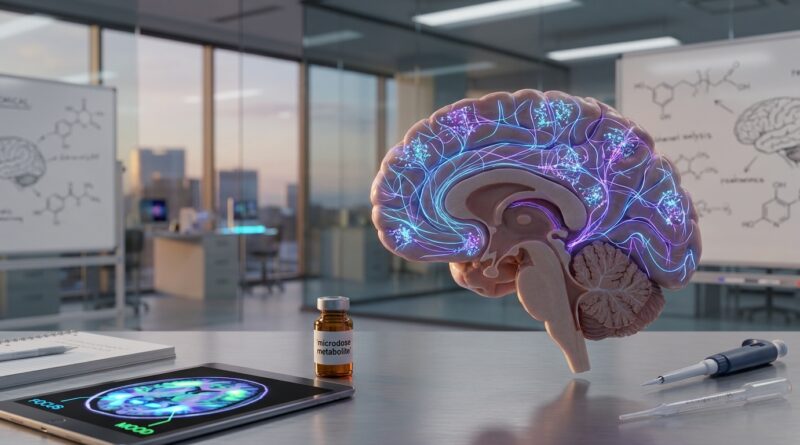
The Microdose Metabolite: How Low‑Dose Psychedelic Byproducts Are Quietly Rewiring Cognitive Health Research In 2026
You are not imagining it. Every week seems to bring another splashy claim about “psychedelic nootropics,” and most of them are either breathless hype or backyard chemistry dressed up as wellness advice. That gets old fast. If what you actually want is better focus, steadier mood, and a brain that feels a little more flexible under stress, the loud talk about hero doses is not very helpful. The more interesting story in 2026 is quieter. Researchers are spending less time chasing dramatic trips and more time studying low-dose metabolites, receptor-selective compounds, and tightly controlled protocols that may support cognition without the full psychedelic experience. That does not mean we have a miracle pill. We do not. But it does mean the science is getting more practical. For people curious about microdosing psychedelics for cognitive enhancement 2026 research, the real question is no longer “Can psychedelics change the brain?” It is “Can specific byproducts do something useful, safely, and repeatably?”
⚡ In a Hurry? Key Takeaways
- Most serious 2026 research is shifting away from DIY microdosing and toward metabolites and receptor-targeted compounds that may keep benefits while lowering disruption.
- If you are curious, treat this as an emerging medical research area, not a home productivity hack. Start with sleep, exercise, stress control, and a doctor-guided reality check on interactions.
- The promise is real enough to watch closely, but the evidence for healthy people using these tools long term is still early, patchy, and nowhere near “safe for everyone.”
Why the conversation changed so fast
For a few years, the public story was simple. Take a tiny amount of psilocybin or LSD, get a little sharper, maybe a little happier, and carry on with your day. That story was always too neat.
Clinical researchers kept running into the same problems. Real-world microdosing reports were messy. Doses varied. Expectations varied. Some people felt better. Some felt nothing. Some felt wired, distracted, or emotionally uneven. And because many people knew they had taken something, placebo effects were hard to rule out.
So labs started asking a smarter question. Instead of using the original psychedelic compound, what if you studied the breakdown products, the so-called metabolites, or engineered cousins that hit only certain receptors? In plain English, researchers are trying to keep the parts linked to neuroplasticity and mood support while reducing the parts that make daily life unpredictable.
What “the microdose metabolite” actually means
When your body processes a drug, it often turns it into other compounds. Those compounds are metabolites. Sometimes they are inactive. Sometimes they do quite a lot.
In psychedelic research, this matters because the original substance is not always the whole story. A parent compound may produce several downstream chemicals, each with different effects, timing, and receptor activity. Some of those byproducts may have gentler cognitive or emotional effects than the headline-grabbing original molecule.
The simple version
Think of it like coffee versus caffeine plus everything else in the cup. The full drink has a whole profile. A researcher might ask whether one part of that profile is doing most of the useful work, and whether you can isolate that part in a cleaner way.
That is where 2026 gets interesting. Instead of asking whether classic psychedelics are good or bad for productivity, studies are asking which molecule, at which receptor, at which dose, on which schedule, in which kind of patient, produces which outcome.
Why researchers care about receptor-selective compounds
You will see the phrase “receptor-selective” more often now, and it is worth understanding. Psychedelics interact with brain signaling systems, especially serotonin receptors. But not every effect comes from the same receptor in the same way.
Some scientists suspect that the brain changes tied to plasticity, flexibility, and mood may be partly separable from the dramatic perceptual effects people associate with a trip. That is a big deal.
If that split turns out to be real, future cognitive-health drugs may look less like traditional psychedelics and more like precision tools. They may be designed to nudge learning, emotional resilience, or stress adaptation without dropping a healthy office worker into a weird six-hour afternoon.
What that could mean for regular people
It means the future of this field may not be “everyone microdoses mushrooms.” It may be prescription compounds, clinic-guided protocols, or even non-hallucinogenic derivatives aimed at very specific problems, like treatment-resistant depression, cognitive rigidity after burnout, or age-related decline in neural adaptability.
What the evidence says right now, in plain English
Here is the honest version. The evidence is promising, but uneven.
For mood disorders and trauma-related conditions, the broader psychedelic field has already pushed hard into mainstream medicine. But for healthy people seeking cognitive enhancement, the case is much softer. We have signals. We do not have certainty.
Where the science looks strongest
Low-dose and metabolite-focused research is drawing attention in a few areas:
- Emotional flexibility under stress
- Reduced rumination in some participants
- Possible support for learning and neuroplasticity markers
- Potential mood stabilization in controlled settings
- Lower disruption than full psychedelic sessions
Those are not small things. But they are not the same as “become a genius at work.”
Where the science is still weak
- Long-term safety in healthy users
- Reliable dose standards across compounds
- Proof of lasting productivity gains
- Understanding who responds well and who responds badly
- Drug interaction risks, especially with antidepressants and stimulants
That last point is where too many influencer posts go off the rails. A protocol that looks “sub-perceptual” on paper can still affect sleep, anxiety, blood pressure, or medication response.
The biggest myth: “If you can’t feel it, it must be safe”
This is one of the most misleading ideas in the whole space. Subtle does not mean harmless.
A low dose may still affect sleep architecture, emotional reactivity, appetite, heart rate, or attention. It may interact with SSRIs, SNRIs, MAO inhibitors, ADHD meds, migraine drugs, or blood pressure meds. And if someone has a personal or family history of psychosis, bipolar disorder, or severe anxiety, even “tiny” experiments can carry real risk.
That is why the best research teams are moving toward careful screening, clear exclusion criteria, measured outcomes, and follow-up. It is boring compared with Reddit folklore. It is also how adults avoid turning curiosity into a medical mess.
How clinical protocols differ from biohacker folklore
This gap matters a lot.
What biohackers often do
- Eyeball doses
- Mix substances without solid data
- Change schedules based on vibes
- Track results loosely, if at all
- Ignore placebo effects
What actual studies try to do
- Use standardized compounds
- Screen for psychiatric and medical risk
- Control timing and dose precisely
- Measure cognition, mood, sleep, and side effects
- Compare outcomes over time
That difference is everything. In medicine, “worked for me” is a starting point, not an answer.
Where this could fit in the real cognitive-health toolbox
This is the part people often skip because it is less exciting. Even if metabolite-based low-dose compounds end up working well, they are unlikely to replace the basics. They will sit next to them.
If your sleep is wrecked, your blood sugar is all over the place, your stress is constant, and your exercise is random, no boutique neuroplasticity compound is going to magically turn that into stable focus.
The practical stack that still matters most
- Consistent sleep timing
- Regular aerobic exercise and some strength work
- Protein, fiber, and decent micronutrient intake
- Stress management that is real, not aspirational
- Medication review if your attention or mood changed recently
That may sound less sexy than a psychedelic metabolite. It is also where the biggest gains usually are.
Who should be especially cautious
Some readers should treat this topic as watch-and-wait, not try-and-see.
- Anyone with bipolar disorder or a history of mania
- Anyone with personal or family psychosis risk
- People on complex psychiatric medication regimens
- People with uncontrolled anxiety or panic symptoms
- Anyone using multiple stimulants or recreational substances
If that is you, the research may still be interesting. It is just not a green light.
What is realistic to expect over the next few years
Do not expect a legal, over-the-counter “psychedelic focus vitamin” that reliably boosts everyone’s brain by 20 percent. That is fantasy marketing.
Do expect more trials built around narrow questions. For example, can a receptor-targeted compound improve cognitive flexibility in people recovering from depression? Can a metabolite support learning or mood without hallucinogenic disruption? Can low-dose schedules be matched to biomarkers or symptom patterns?
That is how mature science moves. Slowly. Specifically. Often less dramatically than social media would like.
The likely winners
The compounds and protocols that survive are likely to have three things in common:
- They produce measurable benefits in controlled studies
- They have predictable safety profiles
- They fit normal life without major impairment
If a candidate fails one of those tests, it may stay a niche curiosity instead of becoming a true cognitive-health tool.
So should you care about this field?
Yes, but with your feet on the ground.
The smartest way to watch this trend is not as a shortcut to being superhuman. It is as part of a broader shift in brain medicine. Researchers are getting better at separating spectacle from mechanism. That is useful. It means the next generation of treatments may be less blunt and more targeted.
For readers who are curious but cautious, that is good news. You do not need to become your own unlicensed lab rat to follow where cognitive enhancement is heading.
At a Glance: Comparison
| Feature/Aspect | Details | Verdict |
|---|---|---|
| Classic DIY microdosing | Unstandardized doses, mixed anecdotal results, high placebo risk, unclear long-term safety | Interesting culturally, weak as a dependable self-improvement plan |
| Metabolite-focused research | Studies specific byproducts for mood, plasticity, and cognitive effects with lower perceptual disruption | Most promising scientific direction, but still early |
| Receptor-selective compounds | Designed to target useful pathways more precisely, with the hope of fewer hallucinogenic or destabilizing effects | Potentially the most practical future option if safety and benefit hold up |
Conclusion
Microdosing psychedelics has gone fully mainstream in conversation, but most people still only have scraps of information from Reddit threads, podcast clips, and people who confuse confidence with evidence. The 2026 research story is more grounded than that. It is moving toward metabolites, receptor-selective compounds, and carefully controlled low-dose protocols that aim for durable cognitive benefits instead of short-lived fireworks. That is worth paying attention to. It is also worth keeping in perspective. For now, this belongs in the “watch closely, stay skeptical, protect your sleep, and do not outrun the data” category. If the field delivers, it could add a genuinely new lane to cognitive health. If it does not, you will still be better off for understanding the difference between clinical science and the next fake “limitless” fad. That is how you stay informed without getting burned.