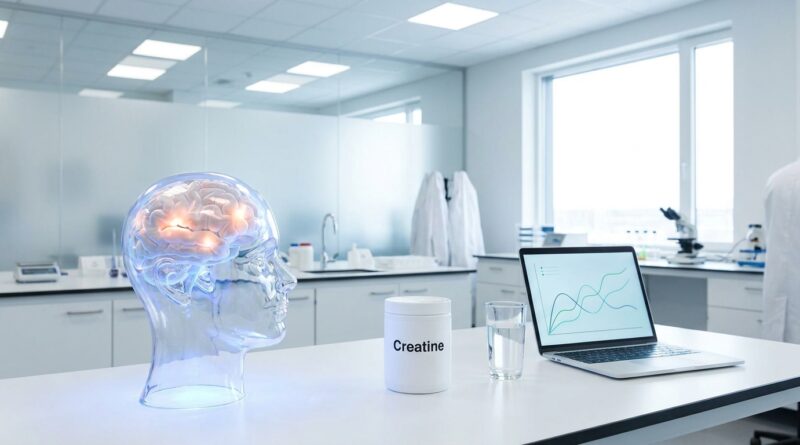
The Creatine Brain Shift: How A Simple Gym Supplement Just Became The Most Underrated Focus Upgrade Of 2026
You know this feeling. You slept badly, work is stacked three screens high, your coffee worked for about 47 minutes, and suddenly your brain feels like it is trying to run modern life on low battery mode. That is why creatine has quietly become one of the most interesting under-the-radar tools for people chasing better focus. Not because it is magic. It is not. But because this cheap gym supplement does something a lot of flashy “brain stacks” do not. It helps your cells manage energy. And your brain is an energy hog. The new shift in 2026 is not that creatine somehow turned into a nootropic overnight. It is that more people are finally asking a smarter question. Not “Will this make me a genius?” but “Can this help my brain perform better when stress, age, training, or lack of sleep start draining the tank?” For some people, the answer looks more promising than you might think.
⚡ In a Hurry? Key Takeaways
- Creatine for brain health and focus is most likely to help when your brain is under strain, especially from sleep loss, aging, heavy mental demand, or low dietary creatine intake.
- Start simple with 3 to 5 grams of creatine monohydrate daily, taken consistently, and give it a few weeks before judging it.
- Skip overpriced “brain creatine” products. Plain creatine monohydrate is the most studied, the cheapest, and the smartest place to start if your doctor says it is appropriate for you.
Why creatine is suddenly part of the focus conversation
Creatine has lived in the “muscle supplement” box for years. Fair enough. It does help with strength, sprint performance, and training output.
But that was always an incomplete story.
Your brain also uses creatine. More specifically, your brain uses the creatine-phosphocreatine system as a quick energy buffer. When your neurons are working hard, they need fast access to fuel. Creatine helps support that process. Think of it less like a stimulant and more like a backup battery pack.
That is a big reason interest in creatine for brain health and focus has grown. It is not pushing your brain with the whip the way caffeine or nicotine can. It may simply help support energy availability in moments when your system is stretched thin.
That difference matters. Especially if you are tired of chasing every new “focus hack” that promises intensity but leaves you jittery, dependent, or wrecked by the afternoon. We have seen that pattern before with trendier options like The Nicotine Nootropic Trap: Why Today’s ‘Focus Pouches’ Could Be The Most Dangerous Brain Hack of 2026. Creatine is much less dramatic, and that is part of the appeal.
What the research actually suggests
Let’s keep this grounded. The data on creatine and cognition is interesting, not final. Some studies show measurable benefits. Others show modest or inconsistent effects.
The pattern that keeps showing up is this. Creatine seems more useful when people are under stress, sleep deprived, older, vegetarian or vegan, or dealing with higher energy demands.
Sleep deprivation
This is one of the more promising areas.
When you are short on sleep, cognitive performance usually drops fast. Reaction time slows. Working memory gets sloppy. Mental stamina falls apart. Some research suggests creatine may help preserve aspects of cognitive performance during sleep loss. Not perfectly. Not enough to replace sleep. But enough to be worth paying attention to.
If your focus problems show up mostly after bad nights, travel, long work sprints, newborn life, or shift work, you may be more likely to notice something.
Older adults
As we age, brain energy metabolism can become less efficient. That is one reason creatine is being studied more seriously in older populations. Some studies suggest possible benefits for memory, processing, or fatigue resistance, especially when paired with exercise.
This does not mean everyone over 50 should expect a dramatic mental upgrade. It means creatine is one of the more sensible low-cost tools being explored for healthy cognitive aging.
Vegetarians and vegans
People who eat little or no meat often start with lower creatine stores. Since creatine is naturally found in animal foods, supplementation may have more noticeable effects in some vegetarians and vegans, both physically and cognitively.
That does not mean meat eaters get nothing. It just means the upside may be a bit bigger if your baseline is lower.
Healthy, rested young adults
This is where hype often runs ahead of reality.
If you are already sleeping well, eating enough, not under unusual stress, and cognitively sharp, creatine may not feel dramatic at all. You might notice nothing mentally. Or just subtle improvements in mental endurance.
That is still useful information. A supplement does not fail just because it is not theatrical.
Who is most likely to benefit
If you want the short version, creatine for brain health and focus is most likely to be worth trying if you fit one or more of these buckets:
- You are often sleep deprived.
- You train hard and also do demanding mental work.
- You are over 50 and want a simple brain-and-body support supplement.
- You eat little or no meat.
- You crash mentally under chronic stress.
- You want fewer exotic supplements and more evidence-backed basics.
It is less likely to feel life-changing if you are young, well rested, well fed, and already functioning near your best most days.
What kind of “focus” benefit are we talking about?
This is important because people hear “brain supplement” and imagine laser-beam concentration, endless motivation, and a sudden love of spreadsheets.
That is not the creatine profile.
What people may notice instead is:
- Better mental stamina
- Less cognitive drop-off when tired
- Slightly steadier working memory
- Less “brain fog” during stressful periods
- A little more resilience, not a huge surge
If caffeine feels like hitting the gas pedal, creatine is more like making sure the engine has enough fuel in reserve.
Best form to buy
Use plain creatine monohydrate
This is the easy part. Buy plain creatine monohydrate.
Not “neuro-creatine.” Not “brain matrix creatine.” Not “focus creatine elite.” Just creatine monohydrate from a reputable brand that tests for purity.
Why? Because monohydrate is the form with the strongest research base, the best value, and the fewest reasons to overthink it. A basic $15 to $25 tub will usually do the job just as well as the flashy product with cyber-looking packaging.
Dosing for brain effects
This is where people get confused because sports dosing and cognitive dosing are not always discussed the same way.
The practical starting dose
For most adults, 3 to 5 grams per day of creatine monohydrate is the standard starting point.
That is enough for many people. It is simple, affordable, and usually well tolerated when taken with enough water and food if needed.
What studies exploring brain effects sometimes use
Some research on cognition, aging, or sleep deprivation has explored higher intakes than the usual gym dose. In certain cases, that can mean around 5 grams daily or more, and sometimes short-term protocols above that.
But this is where common sense matters. More is not automatically better. Higher doses can increase stomach upset, and they are not something to freestyle if you have any medical issues, especially kidney concerns. If you are curious about higher-dose use for a specific brain-related goal, it is smart to run it by your clinician first.
Do you need a loading phase?
Probably not.
Loading is the classic strategy where people take around 20 grams a day for 5 to 7 days, then drop to a maintenance dose. That can saturate stores faster, but it is more likely to cause bloating or stomach issues.
For a focus goal, most people should just skip the loading and take 3 to 5 grams daily. Slower, simpler, fewer complaints.
How long until you notice anything?
Do not expect same-day fireworks.
Creatine is not like coffee. It works through tissue saturation over time. Many people need a few weeks of consistent use before they can fairly judge it. If you are using a non-loading approach, think in the range of 2 to 6 weeks, not 2 to 6 hours.
That also means you should not test it in a chaotic way. If you take it three times one week, forget for eight days, then blame it for not transforming your Tuesday meeting, that is not really a test.
When to take it
Morning, afternoon, or after training?
The nice thing about creatine is that timing matters much less than consistency.
You can take it:
- With breakfast
- After a workout
- With lunch
- Any time you will actually remember it
If it ever causes mild stomach discomfort, take it with food and split the dose if needed.
What about caffeine?
This gets overcomplicated fast.
For most people, taking creatine and caffeine in the same general day is completely fine. The bigger issue is not some dramatic supplement conflict. It is your total stimulation load and sleep quality.
If your goal is better focus, do not accidentally sabotage it by stacking creatine with late-day caffeine and then sleeping badly. A practical setup is simple. Take creatine earlier in the day or after training, use caffeine strategically, and cut caffeine off early enough that your sleep does not get trashed.
Creatine cannot out-supplement a bad sleep schedule forever.
Possible side effects and who should be careful
Creatine is one of the more well-studied supplements out there, and for healthy adults it is generally considered safe at standard doses. Still, “safe” does not mean “for literally everyone without question.”
Common annoyances
- Water retention
- Mild bloating
- Stomach upset if you take too much at once
These are often manageable by using a smaller daily dose, taking it with food, or skipping the loading phase.
Talk to a professional first if
- You have kidney disease or known kidney problems
- You have a medical condition that affects fluid balance
- You take medications that make supplement decisions more complicated
- You are pregnant or breastfeeding and want individualized guidance
And yes, drink enough water. Not gallons. Just normal grown-up hydration.
How to test whether it helps you
If you want to know whether creatine for brain health and focus is actually useful for your life, treat it like a mini experiment.
A simple 4-week trial
- Buy plain creatine monohydrate.
- Take 3 to 5 grams daily for 4 weeks.
- Keep caffeine roughly the same during the trial.
- Track a few things: afternoon focus, mental fatigue, workout recovery, sleep quality, and how fried you feel after a bad night.
- Judge the trend, not one random day.
This is the part people skip. They want a dramatic sensation. Creatine often works more quietly than that.
What creatine will not do
It will not:
- Replace sleep
- Cure burnout
- Fix untreated ADHD
- Erase a terrible diet
- Turn a distracted work environment into deep focus heaven
That realistic ceiling matters. Creatine is a support tool. Not a personality transplant.
If your focus problem is actually stress overload, poor boundaries, doomscrolling, sleep apnea, depression, or five open tabs of panic in human form, creatine may help a little around the edges. It will not solve the root problem.
Why this matters more in 2026
The reason this topic has landed now is simple. People are tired of paying premium prices for proprietary “brain formulas” that hide ingredient amounts, lean on trendy stimulants, and promise more than they can deliver.
Creatine is refreshingly boring. That is good news.
It is cheap. It is studied. It is easy to personalize. And unlike many focus products, it does not rely on making you feel wired so you assume it is working.
That makes it one of the more democratizing supplement stories around right now. You do not need a luxury nootropics budget to test a potentially useful cognitive support tool.
At a Glance: Comparison
| Feature/Aspect | Details | Verdict |
|---|---|---|
| Best use case | Most promising for sleep-deprived people, older adults, heavy trainers, and vegetarians or vegans with lower baseline creatine stores. | Worth a try if your brain is under real strain. |
| Dose and timing | 3 to 5 grams of creatine monohydrate daily is the simplest starting point. Timing is flexible. Consistency matters more than the clock. | Keep it boring and stick with it for a few weeks. |
| Benefit ceiling | Likely supports mental energy and resilience more than it creates a dramatic stimulant-like focus boost. | Useful, but do not expect miracles. |
Conclusion
Creatine is not the sexiest answer to a focus problem. It is just one of the more sensible ones. That is what makes it so appealing right now. If you want a hype-free, affordable way to support mental performance, especially when sleep, stress, age, or training load are dragging you down, creatine deserves a fair look. The smart move is not to expect magic. It is to use plain creatine monohydrate, start with a study-backed daily dose, give it enough time, and pay attention to whether your brain feels more durable, not just more stimulated. Some people will notice a real difference. Some will not. That honesty matters. In a market full of expensive blends and fake urgency, a $15 tub of a well-studied compound may be one of the rare focus tools that is both practical and honest. Sometimes the underrated upgrade is the one that never needed flashy branding in the first place.