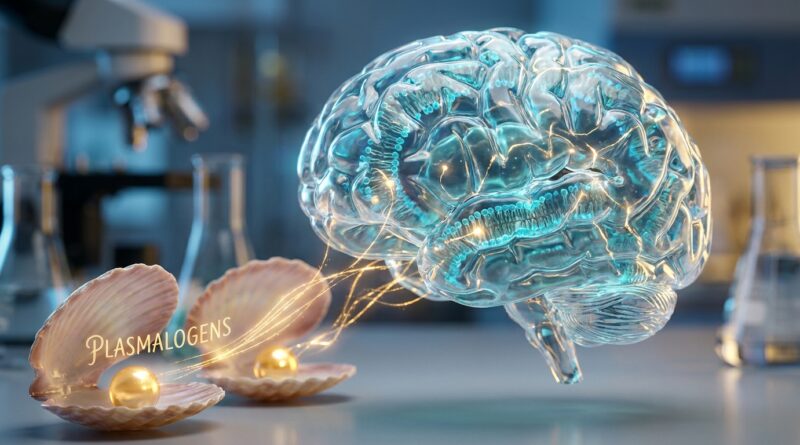
The Plasmalogen Brain Upgrade: How A Tiny Shellfish Lipid Just Outperformed Placebo For Midlife Memory
You know the feeling. You eat pretty well, try to sleep enough, maybe even take fish oil, and still you blank on a name you heard 30 seconds ago. It is frustrating, especially when the internet keeps tossing out miracle brain stacks backed by little more than mouse studies and loud confidence. That is why this new trial on scallop derived plasmalogens for cognitive enhancement is worth a real look. Not because it promises genius mode, but because it tested an actual marine lipid in a placebo controlled human study and found measurable gains in verbal memory and parts of attention. The people who seemed to benefit most were middle aged and older adults who were already starting a bit below average. That matters. It suggests this is not magic for everybody, but it may be useful for the exact group most likely to be shopping for brain support in the first place.
⚡ In a Hurry? Key Takeaways
- A recent human randomized controlled trial found that a specific scallop derived plasmalogen supplement improved verbal memory and some attention measures versus placebo in middle aged and older adults with lower starting scores.
- If you are curious, think of plasmalogens as an add-on to basics like sleep, exercise, omega-3s, and adequate choline, not a replacement for them.
- The study did not raise major safety concerns, but this is still early evidence from one specific extract, so brand quality and your personal health context matter.
What exactly are plasmalogens?
Plasmalogens are a type of phospholipid. In plain English, they are fats that help build and maintain cell membranes, especially in the brain, heart, and nervous system.
They are not some brand new lab invention. Your body already makes them. The issue is that plasmalogen levels can drop with age and may also be lower in certain neurodegenerative conditions. That is why researchers have been paying closer attention.
The version making noise here is marine based, specifically a scallop derived extract. So when people search for scallop derived plasmalogens cognitive enhancement, this is the sort of evidence they are hoping to find. Not promises. A real human trial.
Why this study got attention
Most nootropic buzz falls apart under one simple question. Was it tested in people, against placebo, with meaningful cognitive outcomes?
In this case, the answer is yes.
The trial looked at middle aged and older adults, with a focus on people whose baseline cognitive scores were not great to begin with. That is important because supplements often look stronger in people with room for improvement than in already high performers.
Researchers tested a specific oral plasmalogen extract from scallops over a defined time frame and compared results with placebo. The standouts were verbal memory and select attention related measures. Not every brain metric moved, but some did, and in a way that beat placebo.
What improved, and for whom?
Verbal memory was the clearest win
The biggest practical headline is memory for words and verbal information. That can mean things like recalling lists, remembering spoken details, or hanging onto bits of conversation long enough to use them.
If your complaint is, “I can still function fine, but the little stuff slips more than it used to,” this is the category to watch.
Attention also showed signs of benefit
The trial also reported improvement in select attention measures. That does not mean instant laser focus. It means participants did better on certain tasks involving concentration and filtering information.
That is a modest but useful result. Real life brain function is rarely just “memory” or just “focus.” The systems overlap.
The best responders were not top scorers
People with below average baseline scores appeared to benefit the most. This is a common pattern in nutrition and brain health research. If you are already performing well, there may be less room to improve.
So if you are 32, sleeping great, training hard, and doing crossword puzzles for fun, this is less exciting. If you are in midlife or older and noticing more memory lapses than you like, it is more relevant.
Dosage and timeline. The part people actually want.
Here is the practical takeaway. The study used a specific scallop derived plasmalogen extract at a defined daily dose over multiple weeks. The gains were not overnight. This was not a “take one capsule and feel sharper by lunch” kind of result.
The signal showed up over the course of the trial, which is how brain membrane and lipid support usually works. Slow in, slow out.
Because plasmalogen products can vary a lot, the exact product and standardization matter more than with generic nutrients. If you are trying to match the evidence, you want the closest possible fit to the studied extract, not a random “brain lipid complex” with pretty packaging.
As for effect size, think meaningful but not dramatic. This looked like a nudge, not a personality transplant. Still, a nudge that survives a placebo comparison is more interesting than most supplement chatter online.
Why scallops? Why not just take fish oil?
Fair question. Omega-3s and plasmalogens are not the same thing.
Fish oil gives you fatty acids like EPA and DHA. Those are useful and well studied. Plasmalogens are structural lipids that sit in cell membranes and may affect membrane function, signaling, and resistance to oxidative stress in a different way.
Think of omega-3s as raw materials and anti-inflammatory support, while plasmalogens are more like specialized building components. That is a simplification, but it is close enough to be useful.
So this is not really a fish oil replacement story. It is more of a “maybe this belongs in the same conversation” story.
How to think about it next to choline and other brain basics
If you are building a sane cognitive support plan, start with the boring winners first.
- Sleep that is actually long enough
- Regular exercise, especially cardio plus strength work
- Blood pressure, blood sugar, and hearing checked and managed
- Enough protein and overall calories
- Omega-3 intake from fish or supplements if needed
- Adequate choline from eggs, seafood, meat, or supplements when appropriate
Plasmalogens fit after that, not before it.
Choline matters because it supports acetylcholine production and membrane health. Omega-3s matter because DHA is a major brain fat. Plasmalogens may add another piece by supporting the membrane environment itself. In theory, these can be complementary.
But do not turn this into a 14 bottle experiment on day one. If you try it, keep the stack simple so you can tell what is doing what.
Safety. Any red flags?
The study did not report meaningful safety issues, which is encouraging. That said, “looked safe in the trial” is not the same as “safe for everyone in every form.”
A few sensible cautions:
- If you have a shellfish allergy, talk to your clinician before going anywhere near a scallop derived product.
- If you are pregnant, breastfeeding, or managing a complex medical condition, be extra careful.
- Choose products with transparent sourcing and third party testing when possible.
- If a company hides the actual amount of plasmalogens behind a proprietary blend, keep walking.
Also remember that this evidence is tied to a specific extract. Supplements love to borrow science from one ingredient form and paste it onto another. That is not the same thing.
What this study does not prove
It does not prove plasmalogens prevent dementia.
It does not prove every adult should take them.
It does not prove any scallop supplement on the market will do the same thing.
And it does not mean lifestyle stops mattering.
What it does show is narrower and more useful. In the right population, a specific scallop derived plasmalogen product appeared to improve certain cognitive outcomes more than placebo, without major safety trouble. That is a solid “interesting, worth watching” result.
How I would approach this as a normal person
If you are thinking about self experimentation, do it like a grown-up lab nerd, not like a late night shopping spree.
Step 1: Define the problem
Are you forgetting names? Losing words? Drifting during reading? Missing appointments? Pick one or two real world issues you can track.
Step 2: Clean up the obvious stuff first
If you are sleeping six hours, drinking too much, and living on stress, no supplement is going to save the day.
Step 3: Add one thing at a time
If you test a plasmalogen product, keep the rest of your stack stable for at least several weeks. Otherwise you are just guessing.
Step 4: Measure something
Use a notes app. Track missed appointments, word finding slips, or how often you have to reread a paragraph. Fancy brain apps are fine, but simple logs are often more honest.
Step 5: Give it enough time
This is not a stimulant. If it works, it is likely to be gradual.
Why this matters in the 2026 nootropics mess
We are all swimming in supplement claims that sound scientific until you tug on one thread and find a rat study, a podcast clip, and a before-and-after story from someone also selling the product.
This is why a clean human placebo controlled trial matters so much. Even if the result is modest, it gives you a real anchor. It helps separate signal from noise.
That is the bigger value of the scallop derived plasmalogens cognitive enhancement story. It is not that plasmalogens are suddenly the one true brain pill. It is that they crossed the line from “interesting theory” into “human evidence worth taking seriously.”
At a Glance: Comparison
| Feature/Aspect | Details | Verdict |
|---|---|---|
| Evidence quality | Human randomized placebo controlled trial, focused on middle aged and older adults with lower baseline cognitive performance. | Much better than typical nootropic evidence. |
| Benefits seen | Improved verbal memory and some select attention measures, with strongest relevance for people who already noticed mild decline. | Promising, but not a miracle upgrade. |
| Practical use | Best treated as a targeted add-on to sleep, exercise, omega-3s, and adequate choline, using a product that closely matches the studied extract. | Reasonable for careful self testing, especially in midlife. |
Conclusion
If you are tired of nootropics that promise the moon and deliver anecdotes, this is a refreshing change. A lesser known marine lipid, tested in an actual human RCT, showed meaningful improvement in verbal memory and some attention measures in middle aged and older adults who started out below average, without meaningful safety issues. That does not make scallop derived plasmalogens a cure-all. It does make them one of the more credible new entries in the brain health conversation. The smart way to use this information is simple. Keep your basics strong, respect the fact that this was one specific extract over a real time frame, and see plasmalogens as a possible complement to choline, omega-3s, and good daily habits. In a space crowded with rodent data, anecdotes, and vibes, real placebo controlled human data is rare. That alone makes this worth your attention, and maybe a careful, measured experiment of your own.