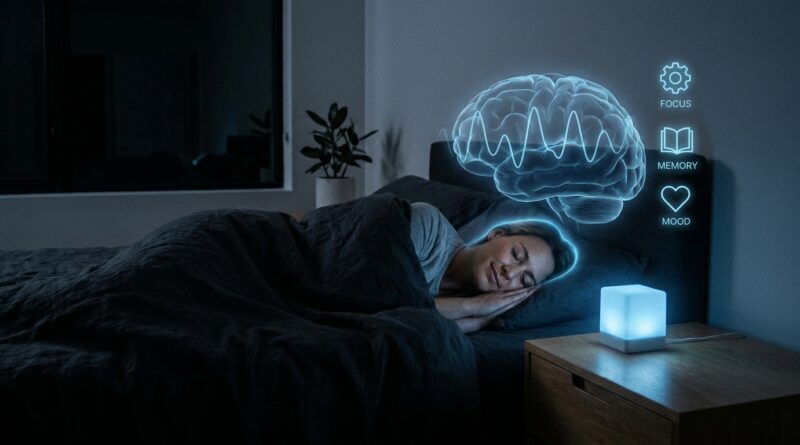
The Sleep-First Nootropic: How A New Alzheimer’s Study Quietly Flipped The Script On Cognitive Enhancement
If you have ever spent money on a focus drink, a mushroom gummy, or a fancy “brain stack” and still felt foggy by 2 p.m., you are not imagining things. It is frustrating. A lot of cognitive-enhancement advice treats sleep like a boring footnote, when for most people it is the main control panel. If sleep is broken, your memory, attention, mood, and even long-term brain resilience all take a hit. That is why a new Alzheimer’s & Dementia study matters far beyond Alzheimer’s research. In people with heavy amyloid plaque buildup, researchers improved sleep architecture directly and added about two hours of restorative sleep. They did this without clearing the plaques themselves, yet key brain health markers still moved in a better direction. That quietly flips the usual script. Before you go hunting for the next nootropic, it may be smarter to fix the nightly system your brain already uses to restore itself.
⚡ In a Hurry? Key Takeaways
- Sleep as a nootropic is not hype. This new study suggests improving deep, restorative sleep can shift brain-health markers even without directly changing plaque levels.
- Start with a simple nightly system: morning light, steady wake time, cooler bedroom, earlier meals, and less late caffeine or alcohol.
- Do not self-prescribe sedating drugs. Use supplements or medications only with medical guidance, especially if you snore, stop breathing in sleep, or wake unrefreshed.
Why this study matters to regular people
Most people hear “Alzheimer’s study” and think, “Important, but not really about me.” This one is different.
The headline idea is simple. Researchers targeted sleep quality itself, especially the kind of sleep architecture tied to restoration and memory processing. They did not first solve the big scary plaque problem. They improved the nightly repair process. That alone appeared to change meaningful brain-related measures.
That is a big deal because it suggests the brain may respond faster to better sleep than to many other interventions people chase for months.
In plain English, your brain is not just “off” while you sleep. It is sorting memories, resetting attention, clearing waste, regulating inflammation, and helping the next day feel mentally usable. If that process is choppy, shallow, or short, no stimulant stack can fully cover for it.
What “sleep architecture” actually means
This phrase sounds technical, but the idea is easy.
Sleep architecture is the pattern and structure of your sleep across the night. It includes how much time you spend in light sleep, deep sleep, and REM sleep, plus how often you wake up and how smoothly you move through those stages.
Think of it like a house. Total sleep time is how long you stayed in the house. Sleep architecture is whether the rooms were usable.
You can be in bed for eight hours and still get lousy restoration if your deep sleep is thin, your REM is disrupted, or you keep waking up.
Why deep sleep gets so much attention
Deep sleep is strongly linked to physical restoration, memory support, and the brain’s nightly cleanup work. It is not the only important stage, but it is often the one people are missing when life gets too wired, too late, and too irregular.
This is where the “sleep as a nootropic” idea starts to make sense. A nootropic is supposed to support thinking. Deep sleep supports thinking at the source.
The script that just got flipped
For years, the common brain-hacker mindset has been: add something.
Add caffeine. Add L-theanine. Add creatine. Add a cholinergic. Add a wearable. Add another supplement because the first five did not turn you into a productivity machine.
But this study hints that subtraction and timing may matter more than stacking.
If better-targeted sleep can improve brain-related markers even in people with significant plaque burden, then a person with ordinary stress, late-night screen habits, inconsistent bedtime, and mild sleep debt may have an even more obvious place to start.
That does not mean supplements are useless. It means foundation first. If you are curious about brain-supportive compounds, you might also like The EGCG + Nicotinamide Brain Combo: Why This Green Tea Stack Is The Quiet New Frontier In Cognitive Health. But even promising ingredients tend to work better when they are not fighting against a wrecked sleep cycle.
Why people feel “tired but wired”
This is one of the biggest modern problems. You are exhausted, but your body does not power down cleanly.
Usually, it is not one thing. It is a mix of bad timing signals.
Common sleep disruptors that look harmless
Bright light at night tells your brain it is still daytime.
Late caffeine blocks sleep pressure even when you feel sleepy.
Alcohol can knock you out, then fragment the second half of the night.
Heavy late meals push your body toward digestion when it should be cooling down and settling.
Inconsistent wake times confuse your internal clock.
A too-warm bedroom can reduce deep sleep.
None of those are dramatic on their own. Together, they can flatten the very sleep stages that make you sharp the next day.
How to reverse-engineer the study into a practical nightly playbook
You do not need a lab. You need better signals.
1. Lock your wake time first
This is the anchor. Pick a wake time you can keep most days, including weekends. Your brain likes rhythm more than perfection.
If your sleep is messy, trying to “go to bed earlier” often fails. Waking at a steady time works better because it trains sleep pressure for the next night.
2. Get bright outdoor light early
Within an hour of waking, get outside for 10 to 20 minutes if you can. Longer is even better on cloudy days.
This helps set your circadian clock, improves evening melatonin timing, and can make it easier to fall asleep at the right time later.
3. Cool the room, and the body
Deep sleep likes a cooler environment. Many people sleep better with a bedroom around 60 to 67°F, though comfort varies.
A warm shower 1 to 2 hours before bed can also help. It sounds backward, but it may help your body cool itself afterward, which can support sleep onset.
4. Stop eating so late
Try to finish your last full meal at least 2 to 3 hours before bed. This gives your body time to shift away from active digestion.
If you need a small snack, keep it light and consistent.
5. Put caffeine on a timer
Many people who say “caffeine doesn’t affect my sleep” are judging by whether they can fall asleep, not by sleep quality.
Try a cutoff at least 8 hours before bed. If you are sensitive, make it 10 to 12 hours.
6. Treat alcohol like a sleep disruptor, not a sleep aid
Alcohol can make you drowsy, but it often cuts into restorative sleep later in the night. If you want to test its effect, compare a few alcohol-free evenings and look at how you feel the next morning.
7. Build a low-friction wind-down
You do not need a candle ritual and a Tibetan sound bowl.
You need a repeatable sequence that tells your brain the day is ending. Dim lights. Put the phone down. Keep the last 30 to 60 minutes boring on purpose. Read paper. Stretch. Shower. Journal. Do the same few things every night.
8. Keep the bedroom dark and quiet
Use blackout curtains if streetlights creep in. Use white noise if your environment is noisy. Small environmental fixes can have outsized effects.
Where supplements and low-dose aids may fit
This is where people often get too aggressive too fast.
Some over-the-counter options and existing medications may help certain people nudge the sleep pathways researchers care about. But “may help” is not the same as “safe for everyone.”
Reasonable first-step options to discuss with a clinician
Low-dose melatonin can be useful for circadian timing, especially if your bedtime drifted later. More is not always better.
Magnesium may help some people relax, though results vary and it is not a magic bullet.
Some nutraceuticals can support calmness or sleep onset in certain users, but quality and dosing differ a lot.
Prescription sleep medications are a more serious conversation. Some can help in the short term, but they are not all designed to improve the deeper architecture of sleep in the way people assume.
This is especially important if you are older, take other sedating medications, have balance issues, or wake groggy.
Big safety note
If you snore loudly, gasp, stop breathing in sleep, wake with headaches, or feel exhausted despite enough time in bed, ask about sleep apnea testing. No supplement stack can solve an airway problem.
How to tell if your “brain fog” is really a sleep problem
People often blame focus when the real issue is restoration.
Clues sleep is the real bottleneck
You need caffeine just to feel normal.
You get a “second wind” late at night.
Your memory feels worse than your motivation.
You are more emotionally reactive than usual.
You sleep in on weekends and still do not feel caught up.
Your tracker says eight hours, but you wake up flat.
If several of these sound familiar, your best nootropic may not come in a capsule.
What to do for the next 7 nights
If you want a simple experiment, try this.
The 7-night sleep-first reset
Pick a fixed wake time.
Get morning outdoor light daily.
No caffeine after lunch.
Eat dinner earlier.
Keep the bedroom cool, dark, and quiet.
Dim lights for the last hour before bed.
Skip alcohol for the week if possible.
Track one thing only: how clear your brain feels by late morning.
Do not overmeasure. You are not trying to win at sleep. You are trying to remove the biggest obstacle to better thinking.
At a Glance: Comparison
| Feature/Aspect | Details | Verdict |
|---|---|---|
| Quick focus boosters | Caffeine, energy drinks, and many nootropic stacks can raise alertness short term, but often do little for broken sleep architecture. | Helpful sometimes, but weak foundation if sleep is poor. |
| Sleep-first approach | Uses timing of light, temperature, meals, and behavior to improve deep and restorative sleep. | Best starting point for clearer thinking and better resilience. |
| Supplements or medications for sleep | Can help the right person, but should be matched to the actual problem, such as circadian timing, anxiety, or fragmented sleep. | Worth discussing with a clinician, not a DIY free-for-all. |
Conclusion
The quiet lesson from this new study is bigger than Alzheimer’s research. In the last 24 hours, findings in Alzheimer’s & Dementia suggested that directly improving sleep architecture in people with heavy plaque buildup added roughly two hours of restorative sleep without changing the plaques themselves, yet still shifted key brain health markers. For everyday readers, that is a loud wake-up call. The fastest, safest “new” cognitive enhancer may be fixing deep sleep with tools that already exist, not stacking another stimulant on top of a tired brain. That means using the basics on purpose: morning light, cooler nights, earlier meals, less late caffeine, and, where appropriate, low-dose existing meds or nutraceuticals under medical guidance. Start there. If your sleep is working for you, every other brain-health move has a better chance of paying off. If it is not, many expensive supplements are just swimming upstream.