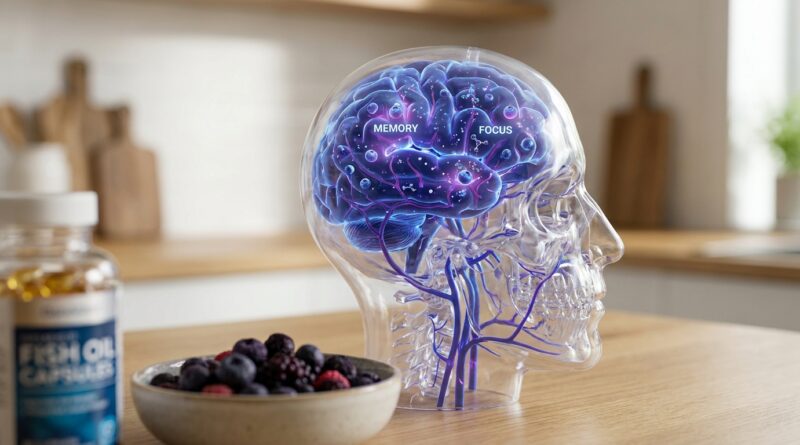
The Polyphenol Focus Upgrade: How A Simple Berry Stack Quietly Outperformed Fish Oil For Everyday Brain Health
If you feel a little conned by the brain supplement aisle, you are not alone. Plenty of smart people have tried fish oil, “focus” gummies, and whatever wellness creator was pushing that week, only to find their attention still falls apart by mid-afternoon. Then the scary headlines show up. Dementia risk. Brain shrinkage. Cognitive decline. It starts to feel like you are late to a test you did not know you were taking. The good news is that a couple of newer human studies have cut through some of that noise. One big reality check: high-dose fish oil did not meaningfully improve memory or slow brain shrinkage in older adults at risk for Alzheimer’s. Another: berry-based interventions, especially freeze-dried blueberries, did show benefits for executive function and even markers of brain structure. That makes the conversation around blueberries for brain health a lot more practical, and frankly, a lot less hype-driven.
⚡ In a Hurry? Key Takeaways
- Recent human trials suggest blueberries for brain health may have more everyday cognitive upside than high-dose fish oil, especially for executive function.
- A simple starting move is adding a consistent daily berry habit, such as blueberries or freeze-dried blueberry powder, instead of chasing random “brain stacks.”
- Food first is usually the safer bet, but if you take blood thinners, manage diabetes, or want concentrated powders, check with your clinician before making big changes.
The fish oil reality check nobody wanted, but many people needed
Fish oil has had a long run as the default “brain supplement.” And to be fair, omega-3 fats are still important nutrients. Your brain uses them. Your body needs them. But “important nutrient” is not the same thing as “this capsule will noticeably improve your memory and focus.”
That gap matters.
In recent high-quality human research, high-dose omega-3 fish oil did not significantly improve memory outcomes or reduce brain shrinkage in older adults at higher risk for Alzheimer’s. That does not mean fish oil is useless. It means many people have been sold a stronger promise than the evidence can support.
If your experience has been, “I took it for months and felt basically nothing,” the latest data suggests you were not imagining it.
Why berries are suddenly getting serious attention
This is where things get more interesting. Berry-based interventions, especially those using blueberries and freeze-dried blueberry powder over a longer period, have shown measurable benefits in areas people actually care about.
Think executive function. Mental flexibility. Better task switching. More control over attention. In some studies, researchers also saw changes tied to brain structure or blood flow, which is one reason blueberries for brain health keeps coming up in science coverage.
That is a very different story from “we think this might help someday.” It is closer to, “this food pattern appears to produce real, measurable effects when people stick with it.”
What is in blueberries that may help the brain?
The main stars are polyphenols, especially anthocyanins. Those are the natural plant compounds that give blueberries their deep blue-purple color.
They are not magic. But they do seem to help in a few useful ways:
- They may reduce oxidative stress, which is basically wear and tear at the cellular level.
- They may support blood vessel function, including the tiny vessels that help feed the brain.
- They may improve signaling between brain cells, especially in regions tied to learning and attention.
- They may help calm low-grade inflammation, which shows up in a lot of age-related brain problems.
That combination makes blueberries more than just “healthy fruit.” They look more like a steady nudge in the right direction.
What this means if your focus crashes every day
Let’s keep this grounded. Blueberries are not Adderall. They are not a cure for burnout, poor sleep, untreated ADHD, or a workday built around six hours of Zoom calls and two meals from a vending machine.
But they may help create a better baseline.
That matters more than people think. Everyday brain health is often about fewer dips, better recovery, and more consistent mental control. If a food-based habit helps support executive function over time, that is useful even if the effect feels subtle day to day.
It is similar to exercise. You may not feel your neurons getting stronger on Tuesday afternoon. But the long game adds up.
If this idea sounds familiar, it connects nicely with The Neuroplasticity Switch: How ‘SuperAger’ Brains Are Quietly Rewriting The Rules Of Cognitive Decline, which gets into how ordinary habits can help preserve sharper brains longer than people assume.
How to build a simple “berry stack” without making it weird
You do not need a biohacker spreadsheet for this.
Option 1: Use whole blueberries
Fresh or frozen both work. Frozen are often cheaper and picked at peak ripeness, so do not treat them like the backup choice.
A practical target is around 1 cup a day, or most days. Add them to:
- Greek yogurt
- Oatmeal
- Smoothies
- Cottage cheese
- Chia pudding
Option 2: Try freeze-dried blueberry powder
This is worth mentioning because some of the stronger interventions used freeze-dried blueberries. The benefit is consistency and concentration. The downside is cost, plus the quality can vary a lot between brands.
If you go this route, look for products with:
- 100% blueberry listed as the only ingredient
- No added sugar or fillers
- Clear serving information
- Third-party testing if available
Option 3: Pair blueberries with a few basics
If you want a simple food-first stack for everyday brain support, this is a sensible one:
- Blueberries
- Protein at breakfast
- Enough water
- A short walk after lunch
- Better sleep timing
Not glamorous. Very effective.
What not to do
This is the part marketers hate.
Do not assume more is always better
A giant scoop of berry powder is not automatically smarter than a normal serving. With polyphenol-rich foods, consistency usually matters more than mega-dosing.
Do not throw out fish entirely if it is part of a healthy diet
The new data is a reality check on supplementation claims, not a reason to fear salmon. Eating fish as part of an overall healthy diet is still a different question from taking high-dose capsules and expecting obvious cognitive gains.
Do not expect one food to fix a broken routine
If your sleep is terrible, your stress is through the roof, and lunch is an energy drink, no berry on earth is going to fully rescue your focus.
Who might notice the most benefit?
The people most likely to care about this are often the ones in the middle. Not sick enough to be in crisis. Not sharp enough to feel great.
That includes:
- Adults who notice afternoon focus dips
- People with family history concerns around cognitive decline
- Older adults trying to protect memory and mental flexibility
- Anyone tired of buying expensive supplements with vague promises
The appeal of blueberries for brain health is that they fit normal life. They are not exotic. They do not require a protocol binder. You can buy them at a grocery store and start tomorrow.
Safety and common-sense notes
For most people, blueberries are a low-risk food. That is part of their appeal. Still, a few things are worth keeping in mind:
- If you have diabetes or are monitoring blood sugar closely, account for fruit in your meal plan.
- If you use concentrated powders, watch for added sugar and huge serving sizes.
- If you have kidney issues or other medical nutrition restrictions, ask your clinician what fits your plan.
- If you are allergic to berries, obviously skip this one.
And as always, “natural” is not a free pass. Food is gentler than many supplements, but your personal medical context still matters.
So, should you replace fish oil with blueberries?
Replace is probably too dramatic. Rethink is the better word.
If you were taking fish oil specifically because you thought it would protect memory or sharply improve brain performance, the latest evidence should make you pause. If you are looking for a more evidence-backed, food-level move, blueberries have a stronger case than many people realize.
That does not mean fish oil has no place. It means it should stop being treated like an automatic brain upgrade.
Blueberries, on the other hand, are earning a place in the conversation because they appear to support the kind of brain functions people actually use every day.
At a Glance: Comparison
| Feature/Aspect | Details | Verdict |
|---|---|---|
| Evidence for everyday cognitive benefit | Recent high-dose fish oil trials did not show meaningful gains in memory or reduced brain shrinkage, while long-term blueberry interventions showed benefits in executive function and related brain measures. | Blueberries currently look more promising for practical brain support. |
| Ease of use | Blueberries can be added to breakfast or snacks with little fuss. Freeze-dried powders are convenient but need label checking. | Food-first berry habits are simple and sustainable. |
| Cost and trust factor | Many fish oil products are pricey and oversold. Blueberries are easy to find, easier to verify, and less dependent on branding hype. | Blueberries win on transparency and grocery-level practicality. |
Conclusion
If you have felt buried under supplement claims, this is one of those rare moments where the science actually makes life simpler. In the last few weeks, high quality human trials delivered two clear reality checks. High-dose omega-3 fish oil failed to move the needle on memory or brain shrinkage in older adults at risk for Alzheimer’s, while long-term berry interventions, especially freeze-dried blueberries, showed measurable benefits on brain structure and executive function. That matters because it replaces guesswork with something useful. You do not need an exotic compound or a flashy stack. You can start with a bag of frozen blueberries, a consistent routine, and a little less faith in marketing. For anyone trying to improve focus, protect long-term brain health, and feel more in control of the process, that is a very good trade. It is also exactly the kind of update that helps turn “brain health” from a scary headline into a smarter grocery list.