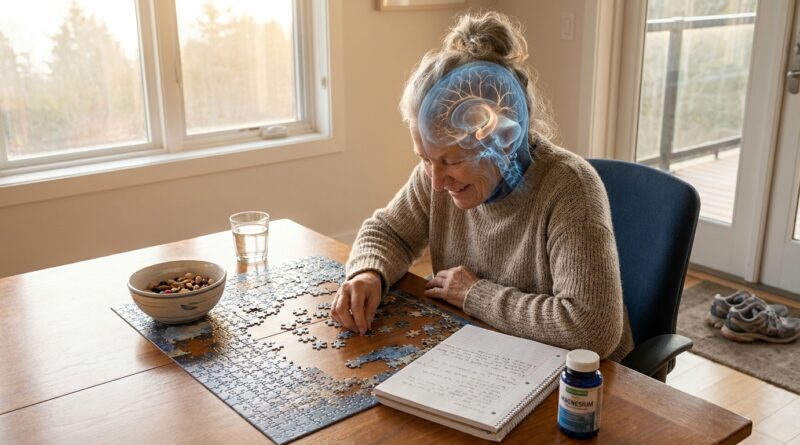
The Neuroplasticity Switch: How ‘SuperAger’ Brains Are Quietly Rewriting The Rules Of Cognitive Decline
It is deeply annoying to do all the “right” brain health things, buy the supplements, read the labels, maybe even try the cold showers and crossword puzzles, and still have that creeping feeling that names, words, and little details are getting harder to grab. A lot of brain aging advice basically shrugs and says this is normal. But there is a fascinating exception. Researchers have found a small group of older adults, often called SuperAgers, whose memory performs more like people decades younger. Their brains do not seem to follow the usual script.
That matters because the big question is no longer just “Can the aging brain decline more slowly?” It is “What keeps some brains plastic, adaptable, and resilient far later in life?” The answer is not one magic capsule. It looks more like a set of repeatable habits that support the hippocampus, the brain region tied to memory, learning, and the ongoing process linked to making and integrating new neurons. If you are wondering, “SuperAger brain neurogenesis how to keep making new neurons,” the useful answer is practical, boring, and honestly pretty hopeful.
⚡ In a Hurry? Key Takeaways
- SuperAger brains suggest age-related memory loss is not completely fixed or inevitable. Some people keep stronger hippocampal function much later in life.
- The best-supported daily moves are steady exercise, deep sleep, learning hard things, stress control, social connection, and metabolic health.
- No supplement has matched the real-world value of these basics, and sudden memory decline should be checked by a clinician, not self-treated with internet stacks.
What is a SuperAger, really?
A SuperAger is usually an older adult, often over 80, whose memory tests come out closer to much younger people than to peers their own age. That does not mean they have superhero brains. It means they are unusual in a very specific way. Their recall, attention, and learning stay remarkably sharp.
Researchers studying these people have noticed a few patterns. Some have thicker areas of cortex than expected for their age. Some show less of the usual wear in brain networks tied to attention and memory. And some seem better at keeping inflammation, stress load, or vascular damage from piling up.
The key point is simple. Their brains are not “young” because of one miracle factor. They seem to preserve brain structure and function through a mix of biology and lifestyle.
Why neurogenesis gets so much attention
When people ask about making new neurons, they are usually talking about neurogenesis. In adults, the area most often discussed is the hippocampus, especially a region involved in forming new memories and separating one memory from another.
This field is exciting, but it is also messy. In animals, adult neurogenesis is easier to study and easier to show. In humans, measuring it directly is harder. Scientists still debate how much continues late in life, how it is measured, and how much it affects day-to-day memory. That said, many researchers agree on something more practical. Even if the exact number of “new neurons” is debated, hippocampal plasticity clearly matters, and some behaviors seem to help preserve it.
That is the real takeaway for regular people. You do not need to wait for every lab debate to be settled before improving the conditions your brain uses to stay flexible.
SuperAger brain neurogenesis how to keep making new neurons
If you want the direct answer, here it is. You probably do not “switch on” a flood of new neurons with one hack. You create a brain environment where growth, repair, and healthy wiring are more likely to keep happening.
Think of it less like taking rocket fuel and more like tending a garden. Not glamorous. Very effective.
1. Aerobic exercise is still the strongest boring answer
Nothing in this space is more consistently useful than regular movement, especially brisk walking, cycling, swimming, jogging, or anything that keeps your heart and lungs working. Exercise is linked to better blood flow, better insulin control, lower inflammation, and higher levels of growth factors such as BDNF, which supports learning and synaptic change.
For many people, the practical target is 150 minutes a week of moderate aerobic activity, plus two sessions of strength work. You do not need to become a triathlete. You do need consistency.
If memory support is your goal, a 30 to 45 minute brisk walk most days is a very serious intervention. It just does not come in a glossy bottle.
2. Deep sleep is not optional maintenance
Sleep is when your brain does some of its best housekeeping. It helps consolidate memories, clear waste products, regulate hormones, and reset the systems that support attention and learning the next day.
Chronic short sleep, sleep apnea, and fragmented sleep are all bad news for memory. If you snore hard, wake up exhausted, or crash in the afternoon despite “enough” hours in bed, get checked. Untreated sleep apnea can quietly hammer the brain for years.
The basic sleep rules still matter. Go to bed at a regular time. Cut late alcohol. Keep the room dark and cool. Get morning daylight. And stop pretending your phone in bed is “wind-down time.”
3. The brain likes effortful learning, not just entertainment
Scrolling is not cognitive training. Neither is doing the same easy puzzle you have mastered for ten years.
Brains stay adaptable when they are asked to do hard, unfamiliar things. Learn a language. Practice an instrument. Take a dance class. Study a new software tool. Memorize poetry. Build a new skill that makes you feel slightly clumsy at first.
The sweet spot is challenge without panic. If it feels easy, the brain probably is not changing much. If it feels impossible, you will quit. Aim for difficult but doable.
4. Stress control protects memory more than people realize
Long-term stress is not just a mood problem. High stress load can affect sleep, blood sugar, inflammation, and hippocampal function. That is a bad combo if your goal is preserving memory.
You do not need to become a meditation monk. But you do need some way to lower the background noise. That can be breath work, prayer, therapy, long walks, journaling, yoga, or simply guarding your schedule better.
If your nervous system is pinned at “always on,” your brain never gets much room to repair.
5. Social connection is brain exercise in disguise
This one gets overlooked because it sounds soft. It is not soft. Real conversation is cognitively demanding. You listen, interpret tone, retrieve memories, predict responses, and regulate your emotions in real time.
Older adults who stay socially engaged often do better cognitively than those who become isolated. That does not mean forced small talk at every community event. It means meaningful interaction. Friends. Family. Group projects. Volunteering. Classes. Clubs. Anything that keeps you connected to other humans in a real way.
6. Metabolic health may be the hidden switch
A lot of memory decline is not just “brain aging.” It is blood vessel damage, insulin resistance, inflammation, poor sleep, and sedentary living showing up in the brain.
That means the standard health markers matter more than people think. Blood pressure. Waist size. A1C. Triglycerides. Fitness. If these are moving in the wrong direction, the brain usually feels it too, even before obvious disease shows up.
This is one reason SuperAgers are so interesting. Their brains may be protected partly because the body systems feeding those brains are in better shape.
7. Food matters, but not as a magic trick
The most useful nutrition pattern is still boringly familiar. Plants, beans, fish, olive oil, nuts, berries, adequate protein, fewer ultra-processed foods, and less sugar chaos. The Mediterranean-style pattern keeps showing up for a reason.
Single compounds get headlines because they are easy to market. Whole eating patterns work because the brain is not one pathway. It is a living organ that needs stable fuel, micronutrients, healthy blood flow, and lower inflammation over years.
What the supplement crowd often gets wrong
Supplements are attractive because they feel precise. One capsule. One job. One hope.
The problem is that the evidence is usually weaker than the marketing. Some compounds may help some people in narrow situations. But there is still no Reddit-famous nootropic stack that reliably turns an average aging brain into a SuperAger brain.
That does not mean every supplement is useless. It means supplements are secondary. If you are deficient in B12, low in vitamin D, or not getting enough omega-3s, correcting that can help. But repleting a deficiency is different from creating genius in a bottle.
Also, be careful with anything that promises stem-cell-like regeneration, peptide-style miracle effects, or “research chemical” memory upgrades. The risk can be very real, especially if the product quality is shaky or it interacts with blood pressure meds, antidepressants, or sleep drugs.
What researchers seem to notice in SuperAgers
The research is still developing, but a few themes keep coming up:
- They often stay physically active.
- They remain socially involved.
- They keep doing mentally demanding things.
- They may show less brain shrinkage in key memory areas.
- They often have fewer hits from vascular disease and metabolic trouble.
Not every SuperAger fits every box. Genetics matter too. Still, this is encouraging news. Most of these factors are not exotic. They are everyday behaviors done steadily for a long time.
A realistic daily playbook for keeping hippocampal plasticity alive
If you want something concrete, start here:
Morning
Get outside within an hour of waking. Walk for 20 to 30 minutes if you can. Bright daylight helps your sleep later, and the walk supports blood flow and mood.
Midday
Eat a meal with protein, fiber, and healthy fats. Keep blood sugar from swinging wildly. Add 10 minutes of learning something new. Language app. Piano drills. Memory practice. Anything challenging enough to demand attention.
Afternoon
Stand up more. Take another short walk if you sit for work. Do a few minutes of strength training two or three times a week. Muscle health and brain health are more connected than they seem.
Evening
Have a real conversation. Read something that makes you think. Lower lights. Cut the doomscrolling. Protect the last hour before bed so sleep actually has a chance.
Weekly
Aim for 150 minutes of aerobic activity. Two strength sessions. One social activity that is not passive. One skill-building block that feels mentally demanding. And one quick check on your health basics, such as sleep quality, blood pressure, or how often you are reaching for junk food because you are exhausted.
When memory problems need more than lifestyle fixes
It is important to say this clearly. Not every memory issue is normal aging, and not every issue can be solved with walking and blueberries.
Talk to a clinician if memory changes are getting worse, affecting bills or medications, causing repeated confusion, or showing up with personality changes, balance issues, depression, or word-finding trouble that feels clearly different from your usual self.
Common causes like sleep apnea, medication side effects, thyroid problems, hearing loss, depression, vitamin deficiencies, and uncontrolled blood sugar can all look like “brain aging” at first. Some are very treatable.
At a Glance: Comparison
| Feature/Aspect | Details | Verdict |
|---|---|---|
| Supplements vs lifestyle | Supplements may help in specific cases, but exercise, sleep, learning, and metabolic health have broader and stronger support. | Start with lifestyle first. |
| Brain training games vs real learning | Simple games can be fun, but new and effortful real-world skills place a bigger demand on attention, memory, and adaptation. | Choose hard, meaningful learning. |
| Normal aging vs warning signs | Mild slowing can be common. Rapid decline, confusion, missed bills, getting lost, or major behavior changes need medical attention. | Do not self-diagnose serious symptoms. |
Conclusion
The most hopeful part of the SuperAger story is that it pushes back on the lazy idea that memory decline is just fate, or that the only answer is chasing the next flashy supplement. The emerging picture is more grounded than that. Some older brains appear to stay resilient because hippocampal plasticity is supported over time by repeatable habits, not miracles. Move your body. Protect sleep. Learn difficult things. Stay connected. Keep blood sugar, blood pressure, and stress from quietly running the show. None of that is trendy, but it is actionable right now. For Cognesium readers, that is the real value here. You do not need to wait for a risky peptide to become legal or for the next nootropic craze to cool off. You can start building a more brain-friendly life today, and the evidence suggests your future focus and recall may thank you for it.