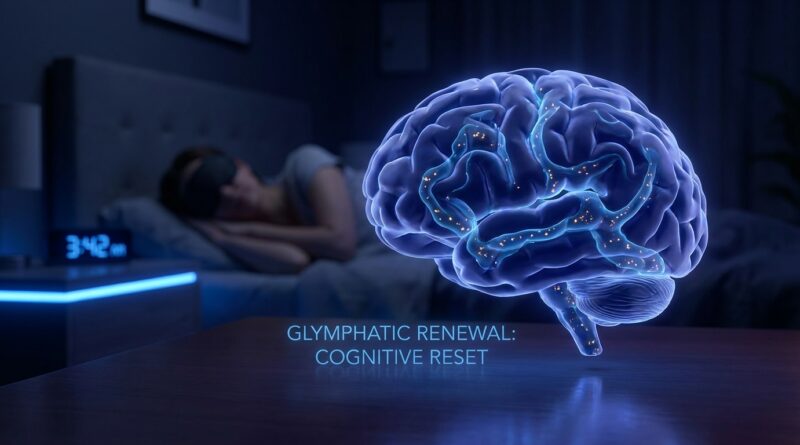
The Glymphatic Reset: How Deep Sleep Is Quietly Outperforming Most ‘Smart Drugs’ For Long‑Term Brain Health
You can spend a small fortune on nootropics, adaptogens, peptides, and “focus stacks,” then still hit that same ugly wall at 2:30 p.m. You feel foggy, a little anxious, and weirdly unable to remember why you opened the tab you are staring at. That is frustrating, especially if you are doing “all the right things.” For a lot of people, the missing piece is not another capsule. It is deep sleep. More specifically, it is whether your brain is getting enough of the slow, heavy sleep that helps run its built-in cleanup system. That system is called the glymphatic system, and it matters more for long-term brain performance than most supplement labels would have you believe. If you care about glymphatic system sleep cognitive health, this is the practical place to start. Better nights often beat fancier stacks, not because sleep is trendy, but because your brain literally uses it for housekeeping.
⚡ In a Hurry? Key Takeaways
- Deep sleep helps the brain clear waste, and that cleanup may do more for long-term cognitive health than chasing another “smart drug.”
- The fastest useful move is to protect the first half of the night, keep a stable sleep schedule, and reduce late caffeine, alcohol, and bright light.
- This is a low-risk, high-value experiment. You can often feel better focus within days, but persistent sleep problems deserve medical attention.
Why this matters more than another supplement bottle
Most people think of sleep as passive downtime. Nice to have. Good for recovery. That is true, but it undersells what is going on.
During deep sleep, your brain shifts into a maintenance mode. Activity patterns change. Fluid movement changes. Waste products that build up during the day are cleared more effectively. This is where the glymphatic system gets attention. Think of it like a night cleaning crew that works best when the building is quiet, the lights are low, and everybody has gone home.
If that cleanup window gets shortened night after night, you may still be awake enough to function. You may even power through with caffeine or a stimulant. But “technically functioning” is not the same as mentally sharp.
What the glymphatic system actually does
The glymphatic system is a brain-wide waste clearance pathway. It helps move cerebrospinal fluid through brain tissue and supports removal of metabolic leftovers. Those leftovers include proteins and byproducts that can build up over time.
You do not need to memorize the biology to understand the practical point. Your brain produces waste while it works. Deep sleep helps clear some of that waste. If deep sleep is cut short, fragmented, or chronically weak, cleanup can suffer.
Why deep sleep gets the spotlight
Not all sleep stages do the same job. Deep sleep, often called slow-wave sleep, is strongly tied to restoration. It is also linked to the electrical patterns researchers can see on EEG. Those slow waves are not just a fun graph on a sleep tracker. They are part of the signal that the brain is entering a state where important maintenance work can happen.
That matters for glymphatic system sleep cognitive health because the question is no longer just “Did you sleep for seven hours?” It is also “Did you get enough quality deep sleep for the cleanup cycle to run well?”
Why you can feel “wired and tired” at the same time
This is the part many high performers know in their bones.
You wake up unrested, hit caffeine hard, get a shaky burst of momentum, and then start dropping words, losing names, and rereading the same email three times. By afternoon, your brain feels both overstimulated and underpowered.
That can happen when your nervous system is propped up, but your sleep architecture is poor. In plain English, you might be spending enough time in bed while still missing the depth and continuity of sleep your brain needs.
Supplements can sometimes mask the daytime symptoms. They usually do not fix the nighttime bottleneck.
What newer research is nudging us to pay attention to
The interesting shift in cognitive health is this. Researchers are paying more attention to sleep quality, slow-wave activity, and EEG patterns that may signal future problems before obvious memory issues show up.
That does not mean every bad night predicts decline. It does mean sleep is moving from the “wellness” bucket into the “core brain maintenance” bucket.
That is a big deal. It gives regular people something practical to work on now, instead of waiting for a crisis or gambling on obscure compounds bought from a sketchy website.
What quietly wrecks your brain’s cleanup window
1. Late caffeine
If caffeine helps you fall asleep “just fine,” but your sleep is lighter, more broken, or less restorative, it is still costing you. Many people need to stop caffeine earlier than they think, often by late morning or early afternoon.
2. Alcohol near bedtime
Alcohol can make you sleepy. It is not the same as giving you healthy deep sleep. It tends to fragment sleep later in the night and can leave you feeling dull the next day, even if total sleep time looks decent on paper.
3. Inconsistent sleep timing
Your brain likes predictability. Going to sleep at wildly different hours confuses the system. A stable wake time usually matters more than people expect.
4. Bright light at the wrong time
Late-night screens, overhead lights, and “just one more episode” all push the brain away from sleep readiness. Morning light does the opposite. It helps anchor your body clock.
5. Running hot
A bedroom that is too warm can make deep sleep worse. Cool, dark, and quiet still works because it matches how the body likes to sleep.
6. Untreated sleep disorders
If you snore heavily, wake gasping, feel crushed by fatigue despite enough time in bed, or your partner notices pauses in breathing, this is not a biohacking issue. It is a medical issue. Sleep apnea can wreck sleep quality and deserves proper evaluation.
The practical reset. What to do this week
You do not need a ten-step moon ritual. Start with the moves that have the best odds of improving deep sleep fast.
Protect the first 4 hours of sleep
The first half of the night often carries a lot of your deep sleep. Stop sacrificing it. If you only fix one thing, fix bedtime drift and revenge procrastination at night.
Set a non-negotiable wake time
Pick a wake time you can keep most days, including weekends. Your body clock responds better to regularity than heroics.
Move caffeine earlier
Try a 7-day test. No caffeine after noon. If you are sensitive, move that cutoff earlier.
Keep alcohol away from bedtime
If you drink, give yourself a few alcohol-free nights and see what happens to next-day focus and mood. Many people are surprised by the difference.
Get outside within an hour of waking
Morning light helps set the timing for better sleep later. You do not need perfection. Ten to twenty minutes outdoors is a strong start.
Cool the room and lower the light
Dim your environment 60 to 90 minutes before bed. Keep the room cool enough that you are comfortable under covers, not sweating on top of them.
Do not turn your bed into an office
If your brain associates the bed with doomscrolling, email, and low-grade stress, sleep quality often pays the price.
How to measure whether this is working
You do not need a lab to run a good experiment. You just need a short scorecard.
Use these simple markers for 7 to 14 days
- How long it takes you to feel mentally “online” after waking
- Whether you need less caffeine by midday
- How often you hit the afternoon fog wall
- Word recall, name recall, and mental stamina in meetings
- Whether your mood feels steadier and less brittle
If you use a sleep tracker, treat it like a hint, not a judge. Consumer wearables can be useful for trends, especially bedtime regularity and rough sleep staging, but they are not perfect. The goal is not to win at sleep data. The goal is to think more clearly.
Deep sleep as performance protocol, not self-care wallpaper
This is where people often miss the opportunity. They think optimizing sleep is soft, boring, or somehow less advanced than a stack with six ingredients and a cyberpunk label.
But if your brain’s cleanup cycle is underperforming, no amount of glossy branding changes that. Deep sleep is not a retreat from performance. It is part of performance.
That is why the conversation around glymphatic system sleep cognitive health feels more useful than endless supplement roulette. It is concrete. It is testable. It has a lower downside. And unlike gray-market compounds, it does not arrive with mystery purity and customs drama.
When sleep support can make sense
There is a place for sleep aids, but they should support the system, not replace the basics. Magnesium, better light timing, stress reduction, and behavioral changes often make more sense as first steps than jumping straight to stronger substances.
If you are already trying multiple products and still waking up wrecked, that is your clue to stop adding and start simplifying.
Who should talk to a doctor sooner rather than later
Please do not try to “biohack through” serious sleep issues.
- Loud snoring or witnessed pauses in breathing
- Morning headaches
- Persistent insomnia lasting weeks
- Restless legs or frequent nighttime waking
- Heavy daytime sleepiness, especially while driving
- Sudden memory changes or cognitive decline
Those deserve proper medical evaluation. Good sleep advice is powerful, but it is not a substitute for diagnosis.
At a Glance: Comparison
| Feature/Aspect | Details | Verdict |
|---|---|---|
| Deep sleep support | Improves the brain’s natural overnight cleanup, supports recovery, memory, and next-day clarity | Best foundation for long-term cognitive health |
| Typical smart drug stack | May boost alertness or focus short term, but often does little for poor sleep architecture | Useful at times, but often a bandage if sleep is broken |
| Risk and cost | Sleep routine changes are cheap and low risk. Exotic compounds can be expensive and uncertain | Sleep wins on value, safety, and sustainability |
Conclusion
The smart conversation in cognitive health is shifting. It is moving away from “what can I take?” and toward “how do I keep my brain’s self-cleaning cycle online?” That is good news, because it gives you a real lever to pull this week. New interest in sleep-driven waste clearance and EEG patterns tied to cognitive risk is not just interesting science. It is practical. Protect deep sleep, and you may notice clearer mornings, steadier focus, and less of that mid-afternoon mental static within days. That is a better trade than spending more money on another mystery stack. Deep sleep is not a wellness bonus. It is a performance protocol. Start there, measure what changes, and let your brain do the job it was built to do at night.