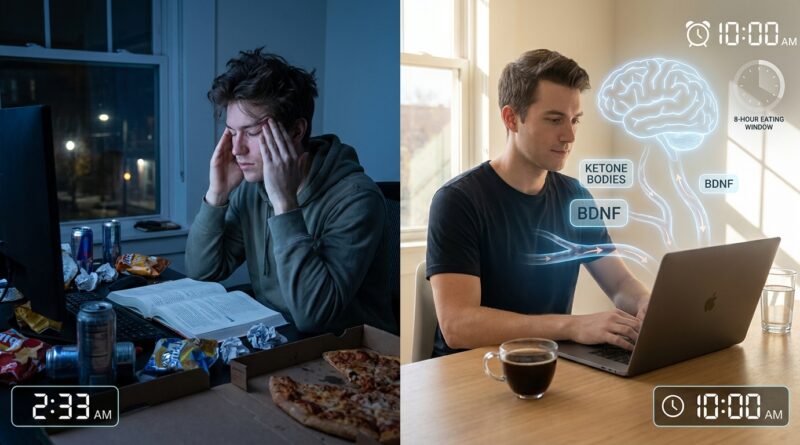
The Ketone Brain Window: Why A Simple 8‑Hour Eating Shift Is Quietly Beating Most Nootropic Stacks
You buy the cleaner stack. You fine tune the caffeine. You add the “focus” capsule everyone swears by. Then 2:30 p.m. hits and your brain still feels like wet cardboard. That is frustrating, especially when you are doing the things that are supposed to help. The missing piece for a lot of people is not another ingredient. It is timing. More specifically, the stretch of the day when you are not eating long enough for your body to make a meaningful amount of ketones.
That is the idea behind the “ketone brain window.” A simple 8 hour eating shift, often something like eating between 10 a.m. and 6 p.m., can quietly improve intermittent fasting ketones cognitive performance by giving your brain a steadier backup fuel source. This is not magic. It is metabolism. When insulin stays lower for longer, your body starts making ketones, blood sugar swings often calm down, and some people notice better mental stamina, clearer focus, and less of that afternoon mental fade. It is low cost, easy to test, and it may do more for your brain than the next bottle in your supplement drawer.
⚡ In a Hurry? Key Takeaways
- An 8 hour eating window may help cognitive performance by increasing ketone production and reducing the blood sugar dips that often flatten focus.
- Start with a gentle 14:10 or 16:8 schedule for two weeks and track your energy, focus, and afternoon slump before changing your supplement stack.
- This is not for everyone. If you have diabetes, a history of disordered eating, are pregnant, or take glucose-lowering medication, talk to a clinician first.
Why your stack may not be the real problem
A lot of nootropic routines fail for a simple reason. They are trying to polish the signal while the power supply is unstable.
If your day is built around constant snacking, sugary coffee, or a breakfast that spikes and drops blood glucose fast, your brain may never get a calm, efficient fuel rhythm. You can still feel a little boost from caffeine or a focus compound. But by mid afternoon, the floor falls out.
This is where time restricted eating gets interesting. Not because it is trendy. Because it changes the fuel mix your brain has available.
What the “ketone brain window” actually means
When you go long enough without eating, your body starts shifting from mostly glucose toward a mix of glucose and fat-derived ketones. Those ketones, mainly beta-hydroxybutyrate, can cross into the brain and be used as fuel.
You do not need to be on a strict ketogenic diet to make this happen. For many people, a daily fasting period of 14 to 16 hours is enough to create at least a modest rise in ketones. That can be especially useful in the late morning or early afternoon, when many people normally hit a mental wall.
Why this matters for focus
Ketones are not just “backup fuel.” They appear to be a cleaner-burning option for some people, especially when blood sugar is bouncing around less. Researchers have also looked at links between ketones and brain blood flow, mitochondrial function, and signaling involved in synaptic plasticity. In plain English, the brain may not just be powered differently. It may work differently.
The quiet advantage over most nootropic stacks
A supplement stack usually adds something. Time restricted eating removes friction.
That is a big difference. If your attention crashes because your energy delivery is unstable, adding more capsules can feel like putting a louder speaker into a car with a bad battery. You may hear more for a minute. The deeper problem is still there.
The reason intermittent fasting ketones cognitive performance is getting more attention is that it starts one level lower, at metabolism. Better fuel use can make everything else you do work better. Caffeine may feel smoother. Focus ingredients may feel more noticeable. Afternoon meetings may stop feeling like a fog bank.
What the research is starting to show
The science is still developing, and not every study says the same thing. That said, there are a few patterns worth paying attention to.
1. Ketones can support brain energy
The brain is energy hungry. When ketones are available, they can supply a meaningful share of that demand. This seems especially relevant when glucose handling is less than ideal, which is not rare in modern adults.
2. Time restricted eating may smooth mental energy
Some people report better sustained concentration, less post-lunch sleepiness, and fewer “crash and recover” cycles. That does not mean every fasted morning turns you into a chess grandmaster. It means the day may feel more even.
3. Metabolic flexibility matters
A healthy brain likes options. If your body can switch between glucose and ketones without drama, you may handle long work blocks better than someone who needs a snack every two hours just to feel normal.
Why an 8 hour eating window is the sweet spot for many people
This is where the article title earns its keep. An 8 hour eating window is often realistic enough to stick with and long enough to create a meaningful fasting period.
For example, if you eat from 10 a.m. to 6 p.m., you are fasting for 16 hours overnight. That is often enough time for insulin to drop and ketones to rise modestly by the next morning and into the early part of the day.
That is your “brain window.” A stretch when your brain may be running on a more stable fuel mix, with fewer snack-driven dips.
Good starter schedules
Not everyone needs to jump straight into 16:8. In fact, many people do better easing in.
- 12:12 if your schedule is chaotic and you want a gentle start
- 14:10 if you want noticeable change without much social pain
- 16:8 if you want the classic time restricted eating setup
What it feels like when it is working
Usually, not dramatic. That is part of the point.
People often expect a movie scene transformation. Instead, the benefits can be subtle but useful. You may notice:
- Less urgent hunger in the morning after an adjustment period
- Fewer energy drops after lunch
- Cleaner focus during the late morning
- Better mental stamina during long stretches of work
- Less reliance on “rescue caffeine” at 3 p.m.
If you are used to measuring success by how hard a nootropic kicks, this can feel underwhelming at first. But steady is often better than flashy.
Common mistakes that make fasting feel awful
When people try this and hate it, it is often because the setup was bad, not because the idea is bad.
Starting too aggressively
Jumping from all-day snacking to a strict 18 hour fast is a good way to feel shaky, grumpy, and distracted.
Keeping junk food inside the eating window
A shorter eating window does not cancel out poor food quality. If your 8 hours are packed with ultra-processed food and sugar, your blood sugar may still bounce around.
Not getting enough electrolytes or fluids
Some of the “fasting headache” people blame on low food is really low sodium or dehydration.
Using fasting to out-caffeinate poor sleep
If you are sleeping five hours and trying to fix it with black coffee plus fasting, your brain will probably file a formal complaint.
How to test this without turning your life upside down
Here is the simple experiment.
Week 1: Pick a realistic eating window
Start with 10 a.m. to 8 p.m. or 9 a.m. to 7 p.m. if that feels easier than 16:8. The goal is consistency, not heroics.
Week 2: Clean up the meals inside the window
Focus on protein, fiber, healthy fats, and carbs that do not send you on a roller coaster. Think eggs, Greek yogurt, fish, beans, nuts, berries, vegetables, rice, potatoes, oats. Pretty normal food.
Track three things
- Morning focus
- Afternoon energy
- How often you reach for extra caffeine or snacks
If those improve, you have learned something useful before spending another dime on supplements.
Can this make your nootropics work better?
Possibly, yes.
This is the underrated part. A stable metabolic setup may improve the “signal” from the compounds you already use. If blood flow is steadier, blood sugar is less chaotic, and your brain is not constantly reacting to meal swings, it becomes easier to notice what a nootropic is actually doing.
That means you may end up needing less stack complexity, not more. For readers who like to optimize, that is a refreshing twist.
Who should be careful
This is not a universal prescription.
Talk to a clinician first if you:
- Have diabetes or prediabetes and use medication
- Are pregnant or breastfeeding
- Have a history of disordered eating
- Are underweight or dealing with high training loads
- Take medications that should be taken with food
Also, if fasting makes you obsess over food, binge later, or feel consistently worse, stop. A brain upgrade that makes your relationship with food worse is not a win.
Why big supplement blogs often miss this
There is not much money in telling people to move breakfast two hours later and stop grazing.
That does not make it less useful. In fact, it may make it more useful. The best cognitive upgrade is often the one that fixes the basics first. Then, if you still want to add a smart supplement later, you are doing it on better ground.
At a Glance: Comparison
| Feature/Aspect | Details | Verdict |
|---|---|---|
| Cost | An 8 hour eating window costs little to nothing, unlike multi-item nootropic stacks that can add up fast. | High value, low risk first experiment. |
| Effect on mental stamina | May reduce afternoon crashes by improving fuel stability and allowing modest ketone production. | Often better for steady focus than chasing quick boosts. |
| Ease of use | Requires schedule changes and a short adaptation period, but no complex dosing or shopping list. | Simple in theory, easiest when started gradually. |
Conclusion
If your stack is expensive, polished, and still not fixing that flat mid afternoon brain, this is worth testing before you buy one more bottle. The ketone brain window is not flashy, and that is exactly why it matters. It gives the Cognesium crowd a low cost, practical way to experiment with cognitive enhancement that most supplement-first advice barely talks about. Instead of hyping another branded pill, it treats time restricted eating as a daily setup that can improve fuel use, support blood flow, and create better conditions for synaptic plasticity. That means any future nootropic may have a better shot at doing its job. More importantly, fresh interest in intermittent fasting ketones cognitive performance suggests this is not a fringe idea for long. It is a shift that may soon look obvious. Try it carefully, track how you feel, and let your calendar, not your capsule count, do some of the heavy lifting.