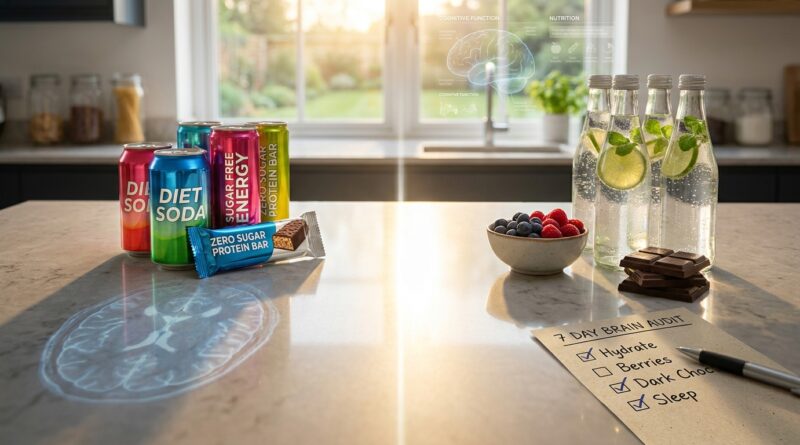
The Hidden Sweetener Brain Tax: How Daily Diet Drinks Quietly Predicted Faster Cognitive Decline In A New 8‑Year Study
You try to do the right thing. You skip the full sugar soda, grab the zero sugar version, toss a few sugar-free snacks into the cart, and figure that has to be better for your body and your brain. So it is frustrating when a big 8-year study comes along and suggests the people using the most low and no calorie sweeteners showed faster cognitive decline over time. Not a tiny lab test. Real people, followed for years. Even after researchers adjusted for things like diet quality and lifestyle, the red flag stayed up. That does not prove every diet drink is harming your brain. But it does challenge the cozy idea that “zero sugar” automatically means brain-friendly. If you deal with brain fog, poor focus, or that weird afternoon mental crash, this is one of those hidden variables worth checking before you spend money on another supplement stack.
⚡ In a Hurry? Key Takeaways
- The new artificial sweeteners cognitive decline study 2026 points to a concerning link between higher sweetener intake and faster cognitive decline over 8 years.
- The smartest next step is simple. Track your diet drinks, sugar-free snacks, gums, flavored waters, and protein bars for one week, then cut the biggest sources for another week and watch your focus, sleep, and energy.
- This study shows a link, not proof of cause and effect. Do not panic. Just treat “zero sugar” as a product claim, not a free health pass.
What the study found, in plain English
This was the kind of study that gets attention for a reason. Researchers followed adults for 8 years and looked at intake of low and no calorie sweeteners, then compared that with changes in cognitive performance over time.
The headline finding was hard to ignore. People with the highest intake of these sweeteners, especially artificial sweeteners and sugar alcohols, showed steeper cognitive decline than those with lower intake.
That is the key phrase. “Steeper decline.” It does not mean every person suddenly developed dementia. It means the group relying most heavily on these products saw worse brain-related changes over time.
Researchers also adjusted for other factors that could muddy the picture, like overall diet quality and lifestyle habits. That matters because the easy pushback is usually, “Well, maybe diet drink users just ate worse overall.” The adjustment does not erase every question, but it does make the signal harder to dismiss.
Why this hits a nerve
Right now, grocery shelves are packed with products screaming “zero sugar.” The message is obvious. Cleaner. Smarter. Better. Safer.
But health marketing and health outcomes are not always the same thing.
Many people in the nootropic and wellness world are hyper-focused on magnesium forms, mushroom blends, choline sources, and caffeine timing. Meanwhile, they may be drinking three diet sodas a day, chewing sugar-free gum nonstop, and eating protein bars sweetened with erythritol, sucralose, or acesulfame potassium.
That is like tuning up your car engine while ignoring the fuel going in.
What counts as “low and no calorie sweeteners”
This category is broader than most people think. It is not just diet cola.
Common artificial sweeteners
These often include sucralose, aspartame, saccharin, and acesulfame potassium. You will find them in diet sodas, drink powders, flavored waters, yogurts, energy drinks, and “light” desserts.
Common sugar alcohols
These include erythritol, xylitol, sorbitol, and maltitol. They show up in sugar-free candy, keto snacks, protein bars, gum, and many “better-for-you” packaged foods.
Natural low calorie sweeteners
Some products use stevia or monk fruit. These are often marketed as more natural options, but the bigger point is that “natural” on the label does not automatically tell you how your body or brain will respond.
Why might this affect the brain?
The study points to an association, not a confirmed mechanism. Still, there are a few reasonable theories researchers and clinicians talk about.
Gut-brain effects
Your gut and brain talk to each other all day long. Some sweeteners may change gut bacteria in ways that affect inflammation, mood, appetite, and mental clarity.
Glucose and appetite signaling
Sweet taste without calories may confuse some of the body’s normal signaling around hunger, insulin response, and reward. That does not happen the same way in everyone, but it is one possible piece of the puzzle.
Hidden dietary patterns
People who use lots of sweeteners may also rely more on ultra-processed foods. Even when studies adjust for diet quality, real life is messy. These products often travel together.
Vascular and metabolic links
Brain health is tightly tied to blood vessel health and metabolic health. If a sweetener pattern is linked with downstream issues there, cognition could take a hit over time.
Important reality check. This is not proof of causation
It is worth slowing down here.
A prospective long-term study is useful. It is much stronger than a one-week trial or a random social media claim. But it still does not prove sweeteners directly caused faster decline.
What it does say is this. Heavy intake showed up alongside worse cognitive outcomes over 8 years, even after adjusting for a lot of the usual suspects.
That is enough to justify caution. Especially if you have been assuming these products are neutral.
The products most likely to sneak this stuff into your day
Most people underestimate intake because they only think about soda. The real total can be surprisingly high.
- Diet soda and “zero” soft drinks
- Energy drinks
- Flavored sparkling water
- Pre-workout powders
- Protein bars and shakes
- Sugar-free gum and mints
- Low-carb ice cream and desserts
- Light yogurt and pudding cups
- Drink sticks and hydration mixes
If you use several of these in one day, your intake may be a lot higher than you think.
A simple 2-week experiment that tells you more than guessing
You do not need a lab. You do not need to swear off every sweet thing forever. Start with a clean little test.
Week 1. Audit without changing anything
For seven days, write down every source of low and no calorie sweeteners you have. Be honest. Count the gum. Count the “healthy” protein bar. Count the flavored water packet in your gym bottle.
Also rate these once a day on a 1 to 10 scale:
- Morning mental clarity
- Afternoon focus
- Cravings
- Bloating or stomach weirdness
- Sleep quality
Week 2. Cut the biggest sources
Remove the top two or three sweetener-heavy products from your routine. Keep everything else mostly the same. Do not start five new supplements at once or change your whole diet in the same week, or you will not know what made the difference.
Swap in simple replacements:
- Water or sparkling water without sweeteners
- Unsweetened tea
- Coffee without sweetened creamers
- Fruit with nuts instead of sugar-free bars
- Plain Greek yogurt with berries instead of “light” dessert cups
If your focus, sleep, cravings, or mental steadiness improve, that tells you something useful fast.
Who should pay the most attention to this?
This matters even more if you already deal with:
- Brain fog
- Attention issues
- Poor sleep
- Frequent headaches
- Metabolic problems or blood sugar swings
- A diet heavy in packaged “fitness” foods
It is also worth taking seriously if you are older, have a family history of cognitive decline, or are already trying to protect long-term brain health.
What not to do
Do not read one study and spiral.
Do not replace ten diet drinks with ten full sugar drinks.
Do not assume all sweeteners are equally risky in the same amounts.
And do not miss the bigger pattern. If most of your “healthy” convenience foods are ultra-processed and sweetened, the label may be cleaning up the image more than the actual nutrition.
What this means for daily life
The useful lesson here is not “panic about every packet of sweetener.” It is “stop giving zero-sugar products a free pass.”
For years, many people treated these products as harmless placeholders. Better than sugar. End of story. This study complicates that. A lot.
If you are spending time and money trying to improve focus, memory, or mental stamina, it makes sense to test the quiet background habits first. The sweetener load in your daily routine may matter more than the fancy capsule on your desk.
At a Glance: Comparison
| Feature/Aspect | Details | Verdict |
|---|---|---|
| Study type | Long-term prospective study following adults for 8 years | Strong enough to take seriously, but not final proof of cause |
| Main finding | Higher intake of low and no calorie sweeteners was linked with faster cognitive decline, especially with artificial sweeteners and sugar alcohols | A real warning sign for heavy users |
| Best reader takeaway | Audit hidden sweetener sources for one week, then cut the biggest ones and monitor focus, sleep, and cravings | Low-cost, practical, and worth testing before buying new supplements |
Conclusion
Almost every aisle in the store is selling “zero sugar” like it automatically means healthier, sharper, and more focused. This new long-term prospective study flips that script. Higher intake of low and no calorie sweeteners, especially artificial ones and sugar alcohols, was linked with steeper cognitive decline over 8 years in otherwise typical adults. That matters because plenty of people are fine-tuning nootropic stacks while quietly drinking diet beverages and eating sweetened “healthy” snacks all day, assuming they are neutral. They may not be. The good news is that this is easy to test without turning your life upside down. Run the simple two-week experiment. Check the labels. Cut a few high-sweetener products. See what happens to your focus, sleep depth, and mental clarity. Sometimes the hidden brain tax is not a missing supplement. It is the stuff riding along in the products you already trust.