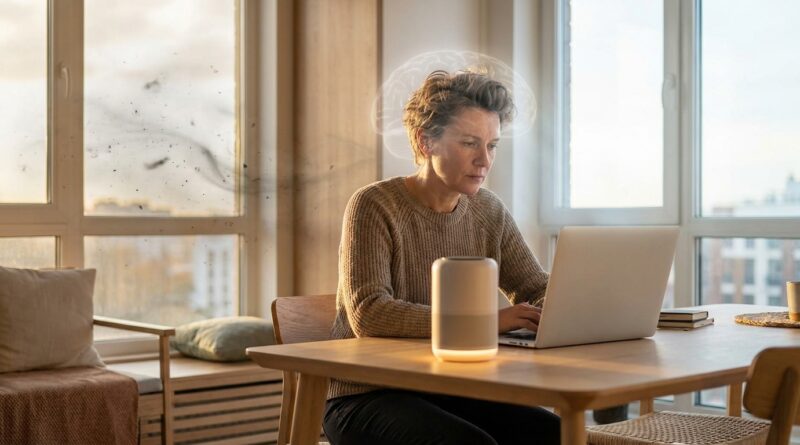
The Air You Think In: How A $99 HEPA Filter Quietly Outperformed Half The Nootropic Aisle In A 30‑Day Brain Test
If you have ever spent real money on magnesium threonate, mushroom powders, caffeine timing, or some very serious-looking capsule with the word “neuro” on the bottle, only to still feel foggy at 3 p.m., you are not imagining it. That slump is frustrating. It can make you feel like your brain is betraying you, even when your sleep tracker looks decent and your lab work comes back boringly normal. Here is the missing piece almost nobody talks about. Your brain is not just running on food, sleep, and supplements. It is running on air. A new study released on August 30, 2026 found that using a HEPA air purifier for four weeks improved higher-order thinking in midlife adults. That matters because this is the age when subtle pollution-related cognitive slowdown can start creeping in. In plain English, a simple box that cleans your room air may do more for focus than half the exotic stuff in the supplement aisle.
⚡ In a Hurry? Key Takeaways
- A HEPA air purifier cognitive function link now has stronger real-world support, with a 30-day study showing measurable gains in higher-order thinking in midlife adults.
- If you want the biggest payoff fast, put a true HEPA unit in the room where you sleep or work most, run it consistently, and replace filters on schedule.
- This is a low-risk, non-drug upgrade, but it works best as part of the basics, not as a replacement for treating sleep apnea, depression, anemia, or other medical causes of brain fog.
The part nobody puts on the supplement label
Most brain-health marketing acts like cognition is a chemistry problem only. Find the right molecule. Adjust the dose. Add a stack. Cycle it. Start again.
But your brain is also a blood flow and inflammation organ. Tiny airborne particles, especially PM2.5, can irritate the lungs, stress blood vessels, and add a constant background load your body has to manage. You may not notice it like you notice a bad night of sleep. That is the sneaky part. Poor indoor air can create a low-grade drag that feels like “I am just not as sharp today.”
That is why this new finding matters. It shifts the conversation from chasing one more capsule to fixing the environment your brain is trying to work in for eight, ten, sometimes fourteen hours a day.
What the new 30-day study found
The study released on August 30, 2026 looked at midlife adults and tested what happened when indoor air was cleaned up with a HEPA filter for four weeks. The headline result was simple and useful. Better indoor air was linked to measurable improvement in higher-order thinking.
Higher-order thinking is the mental stuff people actually care about in daily life. Planning. Organizing. Staying on task. Working through a problem without your thoughts feeling sticky and slow.
This was not framed as a miracle cure. That is good. Miracle cures usually turn out to be expensive disappointment. What makes this interesting is that the intervention was practical, low-risk, and pretty cheap. We are talking about the sort of device you can buy without taking out a second mortgage on your wellness budget.
Why midlife adults should pay attention
Midlife is often when people first notice that their brain feels a little less forgiving. You can still do the work. It just takes more effort. Air pollution may be one reason that shift happens sooner or feels worse indoors, especially in tightly sealed homes, apartments near traffic, or houses with pets, cooking fumes, dust, candles, and wildfire smoke exposure.
That does not mean every foggy afternoon is an air problem. It means indoor air quality deserves a seat at the table next to sleep, stress, exercise, and nutrition.
Why a HEPA filter can help your brain
A true HEPA filter is designed to trap very small particles that would otherwise stay in the air and eventually end up in your lungs. Think dust, smoke particles, some allergens, and other fine junk floating around your home office or bedroom.
When you lower that particle load, a few things may improve:
- Less irritation and inflammation
- Less vascular stress, which matters because the brain is extremely dependent on steady blood flow
- Better sleep quality for some people, especially if allergens or particulates are part of the problem
- Fewer subtle distractions like stuffiness, odor, and stale air
None of this is flashy. That is probably why it gets ignored. But the body often responds well when you remove a constant stressor instead of adding yet another thing to process.
Why the “$99 gadget” idea is so appealing
Because it is sane.
A decent entry-level air purifier often costs less than one month of a serious nootropic habit. It does not ask you to memorize cycling protocols. It does not care whether you take it with fat. It does not upset your stomach. It does not interact with your antidepressant.
And unlike many brain supplements, an air purifier is doing something you can explain in one sentence. It is reducing the amount of fine particulate matter you breathe indoors.
That does not make every cheap purifier good. Some are noisy. Some are too small for the room. Some wave around words like “HEPA-type,” which is not the same as true HEPA. Still, the basic idea is refreshingly straightforward.
How to try this at home without turning it into a science project
If you want to test the HEPA air purifier cognitive function idea in your own life, keep it simple.
1. Put it where your brain spends time
The best room is usually your bedroom or home office. If you work from home, start with the office. If your sleep is shaky, start with the bedroom. If you can only afford one unit, pick the room where you spend the longest uninterrupted stretch.
2. Buy for the room size, not the marketing photo
Check the purifier’s recommended room coverage. A tiny unit on the floor of a large living room is not a biohacking win. It is decor. Match the unit to the space, and if in doubt, go a size up.
3. Look for true HEPA
Look for “true HEPA” or clear CADR information from a reputable brand. Avoid vague wording if you can. If the listing feels like it was written by a hype intern, keep scrolling.
4. Run it long enough to matter
The study looked at four weeks, not one afternoon. Run it consistently, especially overnight and during work hours. A purifier that spends most of its life switched off is not helping much.
5. Track your brain like a grown-up, not a guru
For 30 days, jot down a few simple notes each day:
- Afternoon focus, 1 to 10
- Mental stamina after lunch
- How often you lose your train of thought
- Sleep quality
- Headaches, stuffiness, or allergy symptoms
You do not need a lab. You need a notebook and honesty.
What this probably will not fix
This is important. An air purifier is helpful. It is not magic.
If your brain fog is coming from untreated sleep apnea, iron deficiency, thyroid issues, depression, medication side effects, heavy alcohol use, perimenopause, long COVID, or burnout, clean air may help around the edges but it is not the main fix.
Think of it as removing one hidden brake. If there are three other brakes on, the car still will not feel fast.
Who may notice the biggest difference
In real life, the people most likely to feel a benefit are often those with a higher indoor pollutant load to begin with. That includes:
- People living near traffic-heavy roads
- Apartment dwellers with limited ventilation
- Homes with pets, carpets, and lots of dust
- Anyone dealing with wildfire smoke season
- People who cook often with gas stoves or high-heat frying
- Remote workers spending all day in one closed room
If that sounds like you, this is not some fringe optimization. It is basic maintenance.
Why this can make your existing stack work better
This is the angle a lot of people miss. Even if you love your supplement routine, cleaner air may still be one of the best upgrades because it reduces background stress your body is already fighting.
In other words, if fine particulates are nudging inflammation, irritating airways, and nudging blood vessels in the wrong direction, then your fancy stack may be trying to perform with the parking brake half on. Remove some of that drag, and the rest of your routine may feel more effective.
That is a much more grounded way to think about optimization. Start by fixing friction. Then see what still needs help.
How much should you spend?
You do not need to buy the titanium spaceship model with app alerts, mood lighting, and six fan personalities.
For many bedrooms and small offices, a solid unit in the $99 to $200 range is enough to run a fair test. Spend more only if:
- Your room is large
- You need lower noise at higher fan speeds
- You want better long-term filter availability
- You have serious smoke or allergy concerns
What matters more than luxury features is clean-air delivery, reasonable noise, and filters you can actually replace six months from now.
Common mistakes people make
Buying too small
This is the classic error. If the purifier is undersized, results will be weak and you will blame the concept instead of the hardware.
Hiding it in a corner behind furniture
Airflow matters. Give it space.
Never changing the filter
A purifier is not a forever sponge. Maintenance is part of the deal.
Using it only when the room smells bad
Many of the particles that matter most are not dramatic. Consistency beats panic mode.
Ignoring other indoor pollution sources
A HEPA unit helps, but it is even better if you also reduce what you are putting into the air. Open windows when outdoor air is good. Use kitchen ventilation. Go easy on candles and indoor smoke. Vacuum with a decent machine. Dust surfaces instead of just moving dust around.
At a Glance: Comparison
| Feature/Aspect | Details | Verdict |
|---|---|---|
| Cost vs nootropic stack | A decent small-room true HEPA purifier can start around $99, often less than a month of multiple supplements. | High value if your air quality is poor or you spend long hours indoors. |
| Speed of results | The new study found measurable cognitive improvement after four weeks of cleaner indoor air. | Not instant, but realistic and easy to test over 30 days. |
| Risk and side effects | No stimulant jitters, no supplement interactions, but you do need proper sizing and filter replacement. | Low-risk upgrade. Best used alongside medical care and healthy basics. |
Conclusion
If your focus keeps slipping and you are tired of acting like every cognitive dip must be fixed with another powder, this is a refreshing change of pace. Most brain-health content still chases new molecules, yet a fresh study released on August 30, 2026 found that cleaning up indoor air with a HEPA filter for just four weeks produced a measurable improvement in higher-order thinking in midlife adults, a group where pollution-linked cognitive drag can quietly build over time. That makes indoor air quality more than a throwaway wellness tip. It is a practical, trackable, low-risk upgrade you can start this week. And it may even help the rest of your routine work better by reducing the steady inflammatory and vascular stress of fine particulate exposure. So before you blame yourself, or your supplements, for that muddy afternoon brain, check the air. Your thinking may be only one clean room away from feeling a lot sharper.