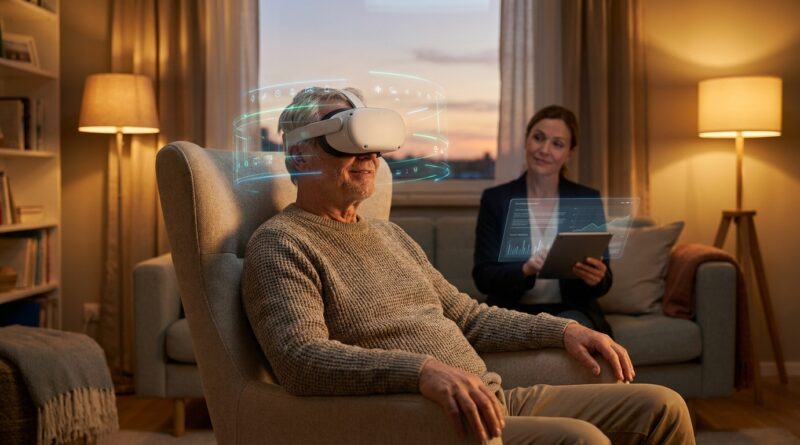
The VR Brain Lab In Your Living Room: How 12-Minute Sessions Just Shifted The Game For Mild Cognitive Impairment
Watching a parent search for a word they used to know instantly is hard. Noticing your own memory slip a little can be just as unsettling. The usual advice does not help much. Take your pills. Do crossword puzzles. Try not to worry. That leaves a lot of families stuck between doing too little and signing up for programs that are expensive, exhausting, or both. The good news is that a new randomized controlled trial points to something far more practical. Older adults with mild cognitive impairment used guided virtual reality sessions for just 12 minutes, three times a week, over four weeks, and showed measurable gains compared with controls. That matters because this is not a five-days-a-week clinic protocol that falls apart by week two. It is short enough to fit into real life. If you have been looking for a science-backed, home-friendly way to start virtual reality cognitive training mild cognitive impairment routines, this is one of the clearest templates yet.
⚡ In a Hurry? Key Takeaways
- A recent randomized controlled trial suggests that 12-minute guided VR sessions, three times a week for four weeks, can help older adults with mild cognitive impairment.
- You can copy the basic structure at home with a simple VR headset, seated use, a caregiver check-in, and a one-month tracking plan.
- VR is promising, but it is not a cure. Start safely, keep expectations realistic, and check with a doctor if there is a history of seizures, severe vertigo, or major balance problems.
Why this study matters more than most “brain training” news
A lot of cognitive wellness headlines sound exciting right up until you read the fine print. Small sample. No control group. Unrealistic schedule. Fancy lab equipment nobody has at home.
This one stands out for a simpler reason. The routine looks doable. Twelve minutes is not much. Three sessions a week is manageable. Four weeks is long enough to test seriously, but short enough that a caregiver or older adult can actually commit to it.
That is the sweet spot people need. Not miracle claims. Not a vague promise that “mental stimulation is important.” A repeatable plan.
What “mild cognitive impairment” actually means
Mild cognitive impairment, often shortened to MCI, is the middle ground that scares people for good reason. It is more than occasional forgetfulness, but not the same as dementia. Someone with MCI may misplace items more often, struggle with names or appointments, or take longer to follow conversations and plans. But they can often still handle most daily activities on their own.
The key point is this. MCI is exactly the stage where people want to do something useful before decline gets worse.
What the VR participants actually did
The headline version is simple. Older adults with mild cognitive impairment watched guided virtual reality content for 12 minutes at a time, three times a week, for four weeks.
That setup matters because guided VR is different from random gaming. It is structured. It gives the brain rich sensory input. It can ask for attention without demanding fast hand movements or steep learning curves. In plain English, it may feel more like being gently led through a mentally engaging environment than being dropped into a video game.
Why VR might help when puzzles start to feel stale
Crosswords and card games are fine. They are also familiar, which means the brain may not be challenged in the same way after a while.
Virtual reality can do a few things at once:
- Hold attention with immersive sights and sounds.
- Reduce outside distractions.
- Create a stronger sense of “being there,” which may help engagement.
- Offer novelty without requiring travel to a clinic.
That does not make VR magic. It just means the format may keep people involved better than a worksheet or app they stop opening after four days.
A home-ready blueprint you can actually try
Step 1: Pick the simplest headset, not the fanciest
If your goal is virtual reality cognitive training mild cognitive impairment support, ease of use beats raw specs. Look for a headset with a clear display, easy straps, and simple controls. A standalone headset is often best because there are fewer cables and less setup friction.
If the person using it gets overwhelmed by tech, the right device is the one they can put on without a 20-minute tutorial.
Step 2: Use seated sessions only at first
Do not start standing. Use a sturdy chair with arms if possible. Clear the floor area anyway, but keep the person seated for the entire session. This lowers the risk of dizziness, wobbling, or panic.
Step 3: Copy the study rhythm
Do not overcomplicate the schedule. Start with the protocol that looked realistic:
- 12 minutes per session
- 3 sessions per week
- 4 weeks total
That gives you 12 sessions in one month. It is enough to spot whether the person tolerates it, enjoys it, and maybe shows signs of benefit.
Step 4: Choose calm, guided content
This is where many people go wrong. You are not looking for roller coasters, zombie shooters, or anything with frantic movement. Pick slow, visually clear, guided experiences. Nature scenes, narrated relaxation environments, simple travel experiences, and gentle attention-based programs make far more sense.
If the content feels confusing or too busy, it is the wrong content.
Step 5: Keep a tiny paper log
This is not glamorous, but it is where the real value lives. After each session, write down:
- Date and time
- How long the session lasted
- Any dizziness or discomfort
- Mood before and after
- Any memory or attention observations that week
You are trying to replace guesswork with a pattern. Caregivers often feel something is helping or not helping, but a simple log gives you something more solid to discuss with family or a clinician.
What improvements should you realistically look for?
Do not expect someone to suddenly remember every appointment or become sharper overnight. The more realistic signs are smaller:
- Better focus during conversations
- Less mental fatigue after tasks
- Improved willingness to engage
- Slightly better recall of recent events or instructions
- More confidence, which matters more than many people realize
Sometimes the first “win” is not memory at all. It is consistency. If a person will actually keep doing a short VR routine, that alone puts it ahead of half the brain health advice floating around online.
Safety first, especially for older adults
Who should be cautious
Talk to a healthcare professional before starting if the person has:
- A history of seizures
- Severe motion sickness
- Major balance problems
- Advanced vision issues
- Severe anxiety or claustrophobia
How to make sessions safer
Keep the room cool. Start when the person is rested. Have a caregiver nearby for the first few sessions. Stop right away if there is nausea, eye strain, confusion, or agitation that does not fade quickly.
Also, clean the headset face padding. Shared gear gets grimy fast, and nobody needs a skin irritation on top of everything else.
How much should you spend?
This is where the story gets practical. You do not need to build a hospital lab in the den. For many households, the total experiment can be fairly modest if you use a consumer headset and free or low-cost guided content.
Think of this as a 30-day pilot, not a forever commitment. If it goes well, great. If it does not, you learned something useful without sinking money into a giant care plan no one follows.
What caregivers can do to make this stick
Routine beats enthusiasm. Put sessions on the calendar. Same chair. Same time of day. Same short check-in after each use.
Avoid turning it into a test. Nobody wants to feel graded in their own living room. Present it as a calming brain exercise, not proof that someone is declining.
That tone matters a lot. Older adults are far more likely to keep using a tool that feels supportive rather than scary.
What this does not mean
This study does not prove VR prevents dementia. It does not mean pills are useless. It does not mean every headset app is now a medical treatment.
What it does mean is more grounded. We now have better evidence that a short, structured, guided VR routine may help some people with mild cognitive impairment, and the schedule is realistic enough to try at home.
How to run your own 4-week trial at home
If you want the shortest version possible, use this:
- Get a simple standalone VR headset.
- Choose calm guided content only.
- Do 12 minutes per session.
- Run 3 sessions a week.
- Continue for 4 weeks.
- Stay seated and supervised at first.
- Track comfort, mood, and attention in a paper log.
- Review the month honestly. Did it feel helpful, neutral, or stressful?
That is a real experiment. Not internet wandering. Not buying random supplements because a comment section said so.
At a Glance: Comparison
| Feature/Aspect | Details | Verdict |
|---|---|---|
| Time commitment | 12 minutes, 3 times a week, for 4 weeks | Realistic for most households |
| Equipment needed | Consumer VR headset, chair, calm guided content, simple tracking log | Affordable compared with clinic-based programs |
| Risk level | Possible dizziness, eye strain, or confusion if content is too intense or setup is poor | Promising, but should be introduced carefully |
Conclusion
This is why the new finding is worth your attention. In the last few days, a randomized controlled trial reported that older adults with mild cognitive impairment who watched guided virtual reality content three times a week for four weeks saw measurable gains versus controls. That is exactly the kind of time frame and intensity real people can stick to. More importantly, it gives families something concrete to try. Instead of bouncing between generic brain games, expensive clinic programs, and scattered nootropic advice, you can build a simple month-long plan at home that is structured, affordable, and safer than most people assume when done properly. No, it is not a cure. But it is a much better starting point than panic. If you have been waiting for a practical way to test virtual reality cognitive training mild cognitive impairment support in the real world, this is a smart place to start.