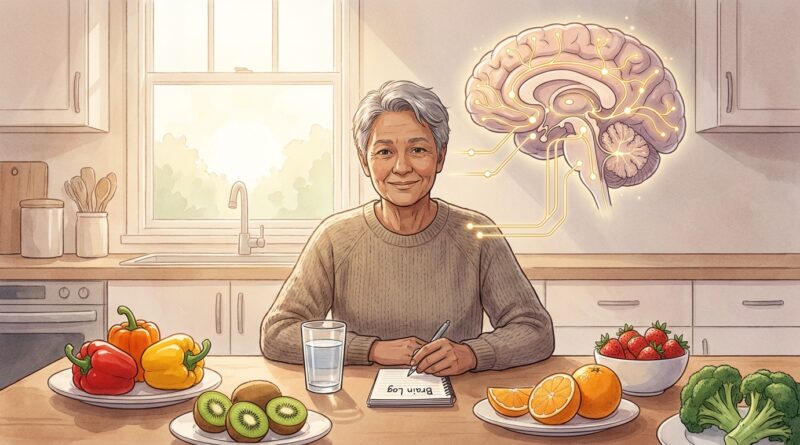
The Vitamin C Brain Map: How A Quiet Nutrient Just Linked To Stronger Memory Networks In 2,000 Older Adults
You can do the walks, clean up your sleep, cut back on junk food, and still have those annoying moments where a name vanishes mid-sentence or your brain feels oddly dim by 4 p.m. That is what makes this new research so interesting. It points away from willpower and toward something much more basic. In a study of roughly 2,000 older adults, researchers found that higher plasma vitamin C levels were linked with healthier structure in parts of the brain’s default mode network, a system tied to memory, attention, and internal mental processing. That does not mean vitamin C is a magic fix. It does mean your everyday nutrient status may be showing up on brain scans in ways we should not ignore. If you care about vitamin C and brain health, this is one of those rare headlines that actually gives you something practical to think about tonight, not just another flashy promise.
⚡ In a Hurry? Key Takeaways
- Higher blood vitamin C in older adults was linked to stronger-looking brain network structure related to memory and attention, but the study does not prove cause and effect.
- The easiest next step is not a fancy supplement. Start with vitamin C-rich foods daily, and ask your clinician whether blood testing makes sense if your diet is limited or your energy and focus have been slipping.
- Vitamin C is generally low-risk at normal intakes, but megadoses are not always better, especially if you have kidney stone risk or certain medical conditions.
What the study actually found
The headline version is simple. Older adults with higher plasma vitamin C, meaning more vitamin C circulating in their blood, tended to show healthier brain structure in parts of the default mode network.
That network matters because it includes regions involved in memory, self-reflection, and mental organization. When this system is not working well, people often notice the kinds of issues that feel familiar with age. More distractibility. More tip-of-the-tongue moments. More mental fatigue.
The useful part here is that this was not based only on food surveys or vague self-reports. Researchers looked at blood levels and brain imaging. That gives the finding more weight, even if it still stops short of proving that vitamin C directly improves memory.
Why vitamin C and brain health might be connected
Vitamin C does more than fight off scurvy. Your brain uses it heavily.
It acts as an antioxidant, which means it helps protect cells from oxidative stress. The brain is especially vulnerable to that kind of wear and tear because it is metabolically active all day long. Vitamin C also supports neurotransmitter production and may help maintain healthy blood vessels, which matters because brain cells need steady blood flow and oxygen.
In plain English, this nutrient helps with the basic housekeeping that keeps brain tissue running smoothly.
The default mode network is not just a nerdy scan term
This network is active when your brain is recalling memories, linking ideas, and managing internal thought. It is one of the systems researchers often watch in aging and cognitive decline.
So when a nutrient shows a relationship with this network on imaging, it gets attention for good reason. It does not prove vitamin C is a treatment. But it suggests this is not just about avoiding deficiency. It may be about supporting the brain’s everyday wiring as we get older.
What this does not mean
Let’s keep both feet on the ground.
This study does not prove that taking vitamin C supplements will sharpen your memory next week. It does not show that low vitamin C is the only reason your focus slips. And it does not mean more is always better.
It is best to read this as a clue. A strong one, but still a clue.
That matters because the brain-health world is packed with overblown claims. If you have been following research on nutrition and aging, you have probably noticed that the most useful findings are often the least glamorous. That is also true in pieces like The Ketone-NAD Brain Fuel Stack: The New Clinical Trial That Quietly Protected White Matter In Mild Cognitive Impairment, which looks at another practical angle on supporting aging brain tissue without pretending there is one miracle answer.
Why blood levels matter more than guesswork
One reason this study is so useful is that it looked at plasma vitamin C, not just what people said they ate.
That is important because intake and actual blood levels are not always the same. Someone can eat fairly well but still come up short because of poor appetite, limited food variety, smoking, heavy alcohol use, certain digestive issues, or simple day-to-day inconsistency. Older adults are especially prone to this.
So if you are serious about vitamin C and brain health, the better question is not “Do I take a supplement?” It is “What is my actual status?”
Who might be more likely to run low
Some groups are more likely to have low vitamin C levels:
Older adults who eat little fresh produce.
People who smoke.
Those under chronic stress.
People with restrictive diets.
Anyone with poor appetite, dental issues, or trouble shopping and cooking.
None of that guarantees a problem. It just means you should not assume you are covered.
What you can do before bed tonight
This is where the study becomes useful instead of just interesting.
1. Build one easy vitamin C habit
Pick one food you will actually eat most days. Not your fantasy self. Your real self.
Good options include oranges, kiwis, strawberries, bell peppers, broccoli, Brussels sprouts, tomatoes, and even potatoes. Bell peppers are especially strong here and often surprise people.
If you want a simple target, aim to include one or two vitamin C-rich foods daily. That alone can move the needle for many people.
2. Know the basic intake targets
For most adults, the recommended daily amount is around 75 mg for women and 90 mg for men. Smokers generally need more.
You do not need to obsess over exact numbers at dinner. Just know that a single orange or kiwi gets you a meaningful chunk. A serving of bell peppers can cover a lot. Food first is a very reasonable plan.
3. Use supplements like a backup, not a personality
If your diet is patchy, a modest supplement can help fill gaps. Something in the 100 to 250 mg range is often enough for many people who are not getting much from food.
That is very different from taking giant doses because a podcast host said more antioxidants must be better. Usually, they are not.
4. Ask smarter questions at your next appointment
If brain fog, low appetite, or dietary limitations are real issues for you, ask your clinician whether checking nutrient status makes sense. You do not need to walk in demanding obscure tests. Just say you are interested in whether your diet and blood levels may be affecting energy and cognitive function.
That opens a much better conversation than “What supplement should I buy?”
Food first options that are low effort
The best brain-support habits are usually the ones that survive a busy Tuesday.
Fast ideas that do not require a life makeover
Keep cut bell peppers in the fridge for snacks.
Add berries or kiwi to breakfast.
Toss broccoli into a frozen meal or stir-fry.
Choose salsa or sliced tomato with eggs.
Keep citrus fruit visible on the counter.
That is the real lesson. Small, repeatable patterns beat grand plans.
Should you worry if your memory has been slipping?
Not every lapse means something serious. Stress, poor sleep, medication side effects, dehydration, low mood, blood sugar swings, and hearing loss can all make memory feel worse.
Vitamin C is one piece of the puzzle. A worthwhile one, but still just one piece.
If changes feel persistent or are getting worse, do not self-diagnose with fruit and hope. Get checked. The best outcome is often finding a fixable issue early.
At a Glance: Comparison
| Feature/Aspect | Details | Verdict |
|---|---|---|
| What the study shows | Higher plasma vitamin C was linked with healthier structure in default mode network regions in about 2,000 older adults. | Promising association, not proof of treatment. |
| Best practical move | Add one or two reliable vitamin C-rich foods daily, and consider discussing blood testing if intake is poor or symptoms persist. | High value, low hassle. |
| Supplement strategy | Modest doses may help fill gaps, but megadoses add little for most people and may not be wise for everyone. | Useful as backup, not magic. |
Conclusion
If you have been doing many of the right things and still feel like your focus is not quite there, this is one of those studies worth paying attention to. It takes vitamin C and brain health out of the wellness buzzword pile and puts it into a more grounded frame. Blood levels of a basic nutrient were linked to memory and attention-related brain networks on imaging in older adults. That is not a miracle cure. It is something better. It is a practical clue. For the Cognesium community, the value is simple. You can use this tonight by tightening up food choices, thinking more clearly about intake targets, and having a smarter lab conversation if needed. In a space obsessed with exotic compounds, this is a refreshing reminder that one of the easiest, lowest-risk ways to support long-term focus may already be sitting in your kitchen.