The Multivitamin Mindshift: How A New Meta‑Analysis Quietly Reignited The ‘Daily Multi For Your Brain’ Debate
You know the feeling. You slept enough, you did the coffee, you even tried to clean up your routine, and still your brain feels like it is running with too many tabs open. That is why the latest talk around a multivitamin cognitive function meta analysis matters more than it might sound at first. Most people hear “multivitamin” and think of something basic, boring, maybe even pointless. But a new look at the data, including the COSMOS cognitive substudies, has quietly reopened the question of whether a plain daily multivitamin can help memory and overall thinking over time. The answer is not magic. It is not a movie-style brain boost. But it is more interesting than the usual supplement hype. For people frustrated with expensive nootropics that promise the moon and deliver very little, this is a rare update that points toward something cheap, simple, and backed by randomized trial data.
⚡ In a Hurry? Key Takeaways
- A new multivitamin cognitive function meta analysis suggests a small but real benefit for memory and global cognition, especially episodic memory, over years rather than days.
- If you want to try it, start with a standard daily multivitamin at around 100 percent of daily values, then track memory, focus, and energy for at least 3 to 6 months.
- This is a low-risk, lower-cost step for most adults, but it is not a replacement for sleep, diet, exercise, or medical care, and some people should check with a clinician first.
Why this story is getting attention
There are two reasons people in the brain-health world are paying attention.
First, the newer COSMOS cognitive studies were not built around vague wellness claims. They asked a very plain question. If you give older adults a standard multivitamin and follow them for years, do memory and overall cognitive scores change in a measurable way?
Second, the latest pooled analysis did not just look at one flashy result. It pulled together the evidence and asked whether the signal still holds up when you step back and look at the full picture. That matters because one positive study can be luck. A pattern across multiple studies is harder to shrug off.
What the studies found, in normal English
The short version is this. The benefit appears modest, but statistically real.
The strongest signal showed up in episodic memory. That is your ability to remember events, stories, lists, and bits of information you ran into recently. Think names, appointments, what you read yesterday, or where you put the charger you swear was just on the desk.
There were also signs of small gains in global cognition, which is a broader measure that tries to capture overall thinking ability. Not every single cognitive measure moved the same way, and the effect was not dramatic. Still, the idea that a simple multivitamin could produce any detectable shift in randomized trials is what makes this so interesting.
What “modest but real” actually means
This is not a supplement that turns Monday brain fog into laser focus by lunch.
It is more like this. If your brain has been running with a few missing inputs for a long time, fixing some of those gaps may help it perform a little better. Not superhero better. Just healthier, steadier, and slightly sharper over time.
That is a lot less sexy than a “limitless pill” story. It is also a lot more believable.
Why a multivitamin might help the brain at all
This is the part many people miss. You do not need a full-blown vitamin deficiency to feel the effects of not getting quite enough of key nutrients. The body is very good at keeping blood levels inside a range that looks acceptable on paper. Your brain, meanwhile, may be doing its best with a little less than ideal.
That is where the low-grade insufficiency idea comes in. Not sick enough to set off alarms. Not optimized enough to feel great.
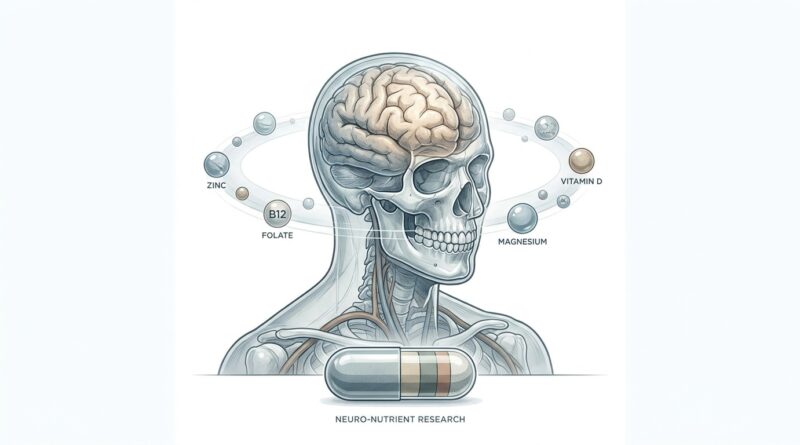
A basic multivitamin can cover common gaps in nutrients involved in energy production, nerve signaling, red blood cell formation, and antioxidant defense. B vitamins, vitamin D, folate, and trace minerals all play some role in the machinery your brain uses every day.
Why standard lab work may not tell the whole story
People often assume that if their routine bloodwork was “normal,” nutrients cannot be part of the problem. That is not always true.
Many lab tests are designed to catch obvious disease, not subtle performance drag. There is a big middle ground between severe deficiency and ideal intake. That middle ground is where a lot of adults probably live, especially if stress is high, meals are inconsistent, or diet quality is more “good intentions” than reality.
What this does not prove
It is worth keeping your feet on the ground here.
This research does not prove that everyone should expect a noticeable daily improvement. It does not prove multivitamins prevent dementia. It does not mean every product on the shelf works the same way. And it definitely does not mean you can ignore sleep, exercise, blood pressure, or blood sugar and make it all up with one tablet.
What it does suggest is narrower and more useful. A standard daily multivitamin may provide a small cognitive edge over time in some adults, likely by reducing silent nutritional shortfalls.
Why this is a reality check for supplement fans
If you spend any time around “brain stack” culture, you know how this usually goes. New compounds get all the attention. Fancy ingredients. Big claims. Tiny studies. Lots of testimonials. Not much long-term evidence.
This update is a good reminder to build your cognitive floor before you chase your cognitive ceiling.
That means checking the boring stuff first. Sleep. Exercise. Blood pressure. Mood. Diet quality. Then simple, evidence-backed basics like a daily multivitamin if it fits your situation.
There is nothing wrong with experimenting carefully later. But it makes sense to start with the move that is affordable, easy to stick with, and supported by randomized trial data.
How to try this without wasting money
If you want to test the idea for yourself, keep it simple.
1. Pick a standard multivitamin, not a “genius formula”
You do not need a neon bottle with words like “ultra,” “neuro,” or “limitless.” Look for a mainstream multivitamin from a reputable company that stays close to daily recommended amounts for most vitamins and minerals.
More is not automatically better. In fact, megadoses can create new problems.
2. Give it enough time
This is important. The research looked at effects over years, not a weekend.
If you are going to test a multivitamin for cognitive support, think in terms of months. A fair personal trial is at least 3 months. Six is better.
3. Track a few boring metrics
You do not need a lab or a wearable empire. Just keep notes once or twice a week on:
- How often you forget small tasks
- How mentally clear you feel in the afternoon
- How easy it is to recall names, lists, or recent conversations
- Whether your energy feels steadier
If you can, use the same simple memory or reaction-time app every couple of weeks. The point is not perfection. The point is to avoid relying on vibes alone.
4. Do not change ten things at once
If you start a multivitamin on the same day you switch to a new diet, buy a standing desk, add creatine, and cut your sleep in half because work exploded, you will have no clue what did what.
Change one or two things at a time.
Who should be more cautious
Even something as common as a multivitamin is not automatically for everyone.
Talk to a clinician or pharmacist first if you:
- Take blood thinners
- Have kidney disease
- Have iron overload issues
- Are pregnant or trying to become pregnant
- Already take separate vitamin A, D, iron, or zinc supplements
Also, check the label. Some multis include iron, some do not. Some have very high B-vitamin levels. Some add herbs you may not want. Simple is usually better here.
What kind of person might benefit most
Based on the logic of the research, the people most likely to benefit are probably not those already eating a near-perfect diet with carefully managed health markers and no nutrient gaps.
The more realistic group is everyone else. Busy adults. Older adults. People under chronic stress. People who skip meals or rotate through the same handful of foods. People whose labs look “fine” but who still feel mentally flat.
That does not guarantee a result. It just makes the mechanism more plausible.
How this fits into a smarter brain-health plan
Think of a multivitamin as maintenance, not horsepower.
It may help make sure the engine has the basic fluids it needs. It is not the turbocharger.
A better plan usually looks like this:
- Protect sleep like it matters, because it does
- Move your body most days
- Eat enough protein, fiber, and minimally processed food
- Control blood pressure, glucose, and stress
- Use a standard multivitamin if you want a low-risk nutritional backstop
- Only then consider more advanced supplements or nootropics
At a Glance: Comparison
| Feature/Aspect | Details | Verdict |
|---|---|---|
| Evidence strength | Backed by randomized COSMOS cognitive substudies and a newer meta analysis, with the clearest gains in episodic memory over longer follow-up. | More credible than most “brain blend” claims, but still modest. |
| Expected benefit | Small improvement in memory and possibly global cognition. Not a fast or dramatic effect. | Worth considering if you want a realistic, low-drama intervention. |
| Cost and risk | Usually inexpensive and easy to use, though certain medical conditions and medication interactions still matter. | Good value for many adults if chosen carefully. |
Conclusion
This is why the latest multivitamin cognitive function meta analysis matters. It cuts through a lot of noise. First, the new COSMOS cognitive substudies and the fresh meta-analysis behind them were built to answer the question people actually care about. Does a basic daily multivitamin really help memory and overall cognition when you follow people for years, or is it just statistical dust? The answer looks modest, but real, especially for episodic memory. That points to a very unglamorous possibility. For many people, the bottleneck may not be some exotic nootropic target. It may be long-running, low-grade micronutrient insufficiency that routine testing does not clearly flag. Second, this is a useful reality check for anyone tempted by ever more complex stacks. Before you head for the cutting edge, you can lock in a cheap, low-risk daily habit with actual trial support. That gives you a stronger cognitive floor. In a supplement world full of hype, that is a refreshingly practical place to start this week and judge over months, not minutes.