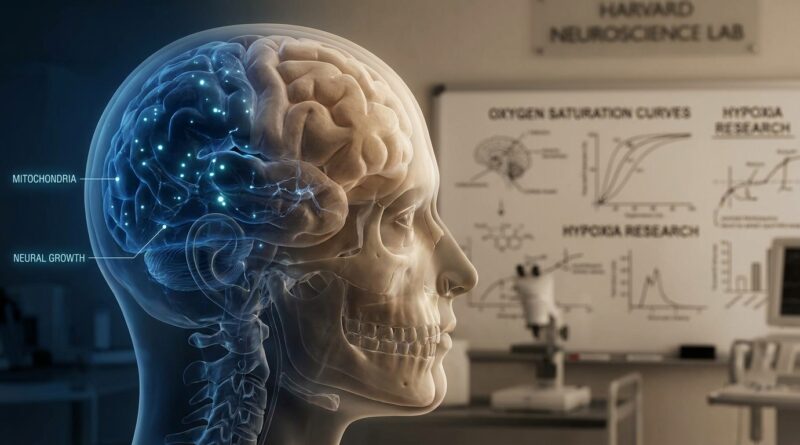
The Hypoxia Pill Experiment: Why Starving The Brain Of Oxygen Just Boosted Memory In Mice
If your supplement shelf looks like a chemistry set and your focus still feels sticky, you are not alone. A lot of people have quietly started to wonder whether the next “brain booster” is just more expensive hope in a bottle. That is why this new hypoxia pill brain memory mice study grabbed so much attention. In several mouse models of neurodegeneration, researchers used a pill to create mild, controlled low-oxygen stress in the brain. Oddly enough, that stress seemed to help. Memory improved. Disease symptoms eased. And the likely reason was not magic. It was metabolism. The treatment appeared to push struggling brain cells to adapt, especially at the mitochondrial level, which is where cells make energy. That is the exciting part. The sobering part is just as important. This was in mice, not people. So no, this is not your sign to start depriving your brain of oxygen at home. But it is a very useful clue about what healthier brains may need.
⚡ In a Hurry? Key Takeaways
- This mouse study suggests a pill that causes mild, controlled hypoxia may improve memory and brain function by helping cells adapt metabolically.
- The practical takeaway for humans is not to copy the pill. It is to support brain energy systems with safe basics like aerobic fitness, sleep, and medically sensible breathing or altitude training.
- It is still preclinical. Promising, yes. Ready for self-experimenting with oxygen deprivation, no.
What actually happened in the mouse study?
The headline sounds backwards. Less oxygen should be bad for the brain. Usually, it is. Severe or prolonged oxygen loss is dangerous. But biology has a strange quirk. A small, carefully controlled stress can sometimes make tissues more resilient.
That seems to be the idea here. Researchers gave mice a compound that created mild hypoxia, meaning the brain sensed lower oxygen availability. Instead of crashing the system, that signal appeared to switch on survival and repair programs. In several neurodegenerative mouse models, the animals showed better memory and improved symptoms.
This is the bit many nootropics takes miss. The pill was not acting like caffeine with a lab coat on. It was not “boosting” the brain in the usual stimulant sense. It was nudging the brain into an adaptive state.
Why would lower oxygen ever help memory?
Think of your cells like tiny hybrid engines. They need fuel and oxygen, but they also need flexibility. When the system gets too comfortable, or starts to break down with age and disease, that flexibility can fade. Mitochondria become less efficient. Energy production stumbles. Neurons are especially sensitive to that.
Mild hypoxia can trigger a built-in emergency response. One key player is a protein system often called HIF, short for hypoxia-inducible factor. It helps cells adjust to low-oxygen conditions by changing how they use fuel, build blood vessels, handle stress, and protect themselves.
That matters because many neurodegenerative diseases share a common problem. Their brain cells struggle with energy. So if a treatment can help mitochondria cope, even indirectly, it may improve how those neurons function.
This is less about “more oxygen” and more about “better adaptation”
That sounds subtle, but it is the whole story. The study does not suggest the brain loves being starved. It suggests the brain may benefit from learning to handle stress better, when that stress is tiny, brief, and controlled.
Why this story is spreading so fast
Because it breaks the usual nootropics script. Most viral brain-hack stories are about adding a compound that turns you into a spreadsheet wizard by Tuesday. This one points somewhere less flashy and more interesting. The real target may be brain energy management, not just neurotransmitter stimulation.
That is a big shift. It moves the conversation away from “What pill gives me more focus today?” and toward “What helps brain cells stay resilient over time?” For people worried about memory, burnout, brain fog, or healthy aging, that is a much more useful question.
What the study does not mean
It does not mean holding your breath is a memory hack.
It does not mean recreational oxygen restriction is safe.
And it definitely does not mean a mouse result automatically becomes a human treatment.
Mice are useful for finding mechanisms. They are not tiny people with email jobs, poor sleep habits, and a coffee dependency. Many things that look great in rodent studies fail in humans because the dose, timing, disease biology, or side effects do not translate well.
Preclinical means early
This is still a preclinical story. That means it is a clue, not a consumer product recommendation. It tells scientists where to look next. It does not tell readers to order mystery capsules from a sketchy website.
So what can a normal person actually do with this information?
This is where the story becomes useful instead of just weird.
You probably cannot access a safe, validated hypoxia pill. Even if you could, there is no good reason to self-test it outside proper medical research. But you can support some of the same broad systems the study points toward.
1. Build aerobic fitness
Regular cardio is still one of the best-supported ways to help the brain. It improves blood flow, supports mitochondrial health, helps insulin sensitivity, and may even support some of the same stress-response pathways that make cells tougher.
You do not need to become an ultra-runner. Brisk walking, cycling, swimming, rowing, and zone 2 training all count. Consistency matters more than drama.
2. Respect sleep like it is part of your stack
If brain cells are already struggling to manage energy, poor sleep pours sand in the gears. Sleep helps with memory consolidation, metabolic cleanup, and overall cognitive performance. Before chasing exotic compounds, fix the thing your brain obviously depends on every single night.
3. Improve metabolic health
Blood sugar swings, insulin resistance, sedentary living, and chronic inflammation can all make brain energy problems worse. A boring plan works here. Lift weights. Walk after meals. Eat enough protein. Keep body composition and glucose control in a healthy range. It is not sexy, but your neurons do not care about sexy.
4. Be careful with intermittent hypoxia training
Yes, there is real interest in intermittent hypoxia training, altitude exposure, and breathwork. In some settings, mild and structured exposure may help adaptation. But this is not a toy. Too much is harmful. If you have heart, lung, vascular, sleep apnea, or neurological issues, unsupervised experimentation is a bad idea.
Breathwork for relaxation is one thing. Aggressively trying to mimic a research protocol on your living room floor is another.
Why mitochondria keep showing up in brain stories
Because they are central to almost everything your brain is trying to do. Thinking is expensive. Memory is expensive. Repair is expensive. If mitochondria are underperforming, the brain can feel slow, foggy, or fragile.
That is why this study matters beyond the novelty of a low-oxygen pill. It fits a broader pattern in neuroscience. Researchers keep circling back to cellular energy, resilience, and stress adaptation. Those may turn out to matter as much as, or more than, many classic “smart drug” targets.
Is this likely to become a real treatment?
Possibly, but there are a lot of steps between “interesting mouse result” and “approved therapy.” Researchers would need to show that the approach is safe, that the oxygen stress is truly controlled, that benefits repeat in humans, and that the upside is worth the risk.
The dose window could also be tricky. Too little may do nothing. Too much could be dangerous. That is often the challenge with hormesis, which is the fancy term for a little stress being helpful and a lot being harmful.
What smart readers should take away from the hype
Do not focus on the gimmick. Focus on the signal.
The gimmick is “a pill that starves the brain of oxygen.” The signal is that failing brain cells may improve when you help them adapt metabolically. That is a much more grounded and useful way to understand the story.
It also explains why some of the most helpful brain-support habits look almost annoyingly basic. Better fitness. Better sleep. Better glucose control. Better cardiovascular health. These all support the same core issue. They help the brain make and manage energy.
At a Glance: Comparison
| Feature/Aspect | Details | Verdict |
|---|---|---|
| Study type | Preclinical mouse research across several neurodegenerative models | Promising, but far from proven for humans |
| Main mechanism | Mild, controlled hypoxia appears to trigger adaptive stress responses and support mitochondrial function | Scientifically interesting and biologically plausible |
| What readers should do now | Focus on safe brain-energy basics like aerobic conditioning, sleep, and metabolic health, not DIY oxygen restriction | Useful today, low hype, high practicality |
Conclusion
This story matters because the most talked-about nootropics headline right now is not another stimulant or trendy mushroom blend. It is a hypoxia pill brain memory mice study that hints at something deeper. The next real breakthrough for cognition may come from helping brain cells handle stress and energy failure better, not from simply revving them harder. That is exciting. It is also early. The mouse results are worth watching, especially because they fit a wider push to use controlled hypoxia signals to rescue mitochondria and slow disease. But the safe, useful move today is simpler. Get fitter. Sleep better. Clean up metabolic health. Be cautious with any hypoxia-style training unless it is structured and appropriate for you. That way you stay ahead of the hype cycle without becoming another test case for it.