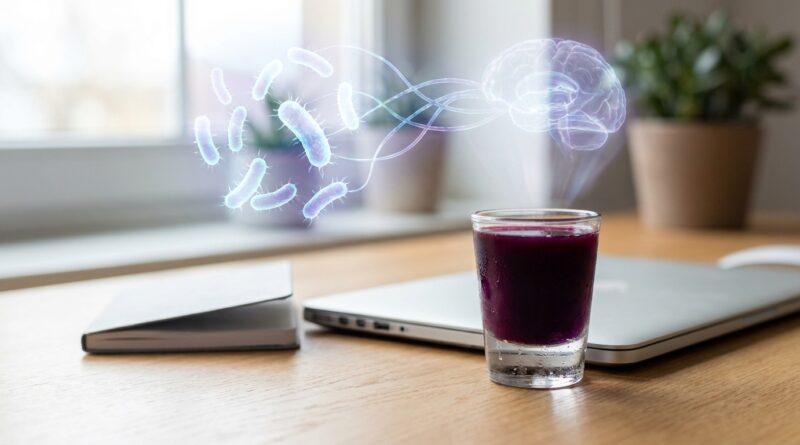
The Blackcurrant Psychobiotic Shift: How A Simple Purple Shot Just Became The Most Unexpected Focus Upgrade Of 2026
You know the feeling. You sleep a little less, stress climbs a little higher, and suddenly your focus falls apart even though you are still doing the “good brain” stuff. You drank the water. You took the magnesium. You cut back on late coffee. Then another shiny nootropic drink shows up promising clean energy, but it is basically the same caffeine story in a nicer can. That is why this new blackcurrant psychobiotic nootropic focus idea is getting attention. It is not selling you another buzz. It points to something simpler. Feed the gut bugs that may help your stress response in the first place. A new lab study making the rounds in the microbiome world found that blackcurrant juice helped certain probiotic strains grow up to 49 times faster than control conditions. That does not prove sharper thinking overnight. But it does suggest a practical, low-risk routine that could help mood, mental stamina, and focus without beating up your sleep or your stomach.
⚡ In a Hurry? Key Takeaways
- Blackcurrant juice may help certain probiotic strains grow much faster, which makes it an interesting psychobiotic support tool for mood and focus.
- The practical move is a protocol, not a miracle product. Pair a probiotic strain with some human mood or sleep data and a small daily serving of blackcurrant polyphenols.
- This is a low-cost experiment, but it is still early science. Start small, watch your gut and sleep, and check with your clinician if you have GI issues, diabetes, or take medications.
Why this matters more than another “brain drink”
Most focus products work like a louder alarm clock. More caffeine. More stimulants. More urgency.
That can help for a few hours. It can also leave you more wired, more anxious, or weirdly tired the next day. For a lot of people, the real problem is not lack of stimulation. It is that stress and poor sleep are eating away at attention from the edges.
That is where psychobiotics come in. The term usually means probiotics, or probiotic-friendly compounds, that may affect mood, stress signaling, and brain function through the gut-brain connection.
It sounds trendy, but the basic idea is not. Your gut microbes help shape inflammation, neurotransmitter precursors, and even how your body responds to stress. If that system is off, “just focus harder” stops working fast.
What the new blackcurrant finding actually showed
The headline result is eye-catching. In an in vitro study, meaning in the lab and not in living people, blackcurrant juice accelerated the growth of certain probiotic strains up to 49 times compared with control conditions.
That matters because blackcurrants are rich in polyphenols, especially anthocyanins, the compounds that give dark berries their deep purple color. These compounds are often studied for antioxidant and anti-inflammatory effects, but they may also act like fertilizer for helpful gut microbes.
Important reality check. A lab dish is not your digestive tract. Human bodies are messier. Your stomach acid, diet, stress level, medications, and existing microbiome all change the outcome.
Still, this is a useful clue. If a specific fruit can help a useful strain thrive, the better question is not “Should I buy blackcurrant everything?” It is “Can I build a simple routine around this that is cheap, repeatable, and easy to judge?”
The real upgrade is the protocol
This is the part supplement-savvy readers will appreciate. The win here is not another capsule collecting dust in the kitchen drawer. It is a stack that makes sense.
Step 1: Pick a probiotic strain with at least some human mood or sleep data
Do not shop by brand vibes. Shop by strain specificity.
Look for products that clearly list the full strain name, not just the species. For example, some combinations of Lactobacillus and Bifidobacterium strains have early human data tied to stress, anxiety, sleep quality, or emotional resilience. The exact best choice depends on what is available in your area, but the key is transparency and evidence.
If the label is vague, skip it.
Step 2: Pair it with a small daily dose of blackcurrant polyphenols
You do not need a giant sugary bottle. In fact, smaller is probably smarter.
A practical starting point could be one small serving of unsweetened or low-sugar blackcurrant juice, or a blackcurrant powder/extract standardized for polyphenols if you prefer a lower-sugar option. Think “purple support shot,” not “fruit punch.”
The goal is consistency. Daily beats heroic.
Step 3: Tie it to a ritual
This is where people either get results or forget the whole thing by Tuesday.
Attach the routine to one anchor point. Either:
- Take it at night, after dinner or 60 minutes before bed, if your main issue is stress, racing thoughts, or poor sleep.
- Take it early in the morning, before caffeine, if your main issue is fragile focus and stress-reactive brain fog.
Keep the ritual boring on purpose. Same time. Same glass. Same amount. Less decision fatigue.
What kind of focus boost should you expect?
Not a stimulant jolt. That is the whole point.
If this helps, the effect is more likely to feel like less friction. You sit down to work and your brain does not resist as hard. You recover faster from stress. You feel less mentally “brittle” by mid-afternoon.
That may sound modest, but modest is often what lasts. The best cognitive routines usually feel a little underwhelming at first because they are supporting the system, not forcing it.
Who this blackcurrant psychobiotic nootropic focus routine is really for
This is best for people who:
- Already know caffeine is not the full answer
- Notice focus gets worse when stress or sleep slips
- Want a low-risk experiment they can run this week
- Prefer steady mood and mental stamina over a dramatic spike
It is probably less exciting for people chasing instant “limitless pill” effects. That is fine. This is not that category.
How to test it without fooling yourself
Supplements get messy because people change five things at once, then guess what worked.
Run a 14-day test
For two weeks, keep the rest of your stack stable. Add only:
- One probiotic with strain details and mood or sleep relevance
- One small daily blackcurrant serving
- One fixed timing ritual
Track three things
- How easy it feels to start focused work
- Your stress level in the afternoon
- Your sleep quality the next morning
Use a simple 1 to 10 score in your notes app. Nothing fancy.
Look for a pattern, not a miracle
If your focus start-up friction drops from an 8 to a 5, that is useful. If your sleep gets worse, that is also useful. The point is feedback.
Best forms to consider
Juice
Good for simplicity. Just watch the sugar. Unsweetened is your friend.
Powder
Often easier to standardize and easier to store. Mix into water or yogurt.
Extract
Useful if you want polyphenols with less sugar and less volume. Quality matters more here, so buy from a brand that actually says what is in it.
Safety and common-sense caveats
This is food-plus-supplement territory, which is usually pretty approachable, but not risk-free for everyone.
- If you have IBS, SIBO, or a history of probiotics making you feel worse, go slowly.
- If you need to limit sugar, choose a low-sugar or powdered option.
- If you take medications or have a chronic condition, ask your clinician before adding new supplements.
- If a product gives you bloating, headaches, or sleep disruption, stop. Simple beats stubborn.
Why this idea feels surprisingly fresh in 2026
Because it shifts the conversation from product hype to system support.
For years, brain supplements have been sold like software patches. Install this ingredient. Unlock better output. But your brain is not running alone. It is tied to your stress chemistry, inflammation, sleep quality, and gut ecosystem.
The blackcurrant angle is interesting because it suggests a helper ingredient that may improve the environment for the probiotic, instead of asking one capsule to do all the work by itself.
That is a more grown-up way to think about nootropics.
At a Glance: Comparison
| Feature/Aspect | Details | Verdict |
|---|---|---|
| What it does | Supports the gut environment for selected probiotic strains, which may help mood, stress handling, and mental stamina over time. | Promising for steady support, not instant stimulation. |
| How to use it | Pair a strain-specific probiotic with a small daily blackcurrant serving, ideally at the same time each day for 14 days. | Easy, cheap, and realistic for most people. |
| Evidence level | Early and interesting. The blackcurrant growth data is from lab conditions, not a finished human focus trial. | Worth testing carefully, but do not treat it like proven medicine. |
Conclusion
The appeal of this blackcurrant psychobiotic nootropic focus shift is that it does not ask you to believe in magic. It asks you to try a sensible protocol. A new in vitro study shared in the microbiome community this week found that blackcurrant juice can accelerate the growth of certain probiotic strains up to 49 times faster than control conditions, hinting at a powerful way to fertilize helpful bugs that influence stress chemistry, inflammation, and possibly cognitive performance. For people who already know their way around supplements, the bigger idea is more useful than the headline. Choose a strain with early human data for mood or sleep. Pair it with a small daily serving of the right fruit polyphenols. Fold that into a repeatable nighttime or early-morning ritual. That gives you one low-risk, low-cost experiment you can run this week, alongside your current stack, and it teaches the habit that matters most. Think in protocols, not products.