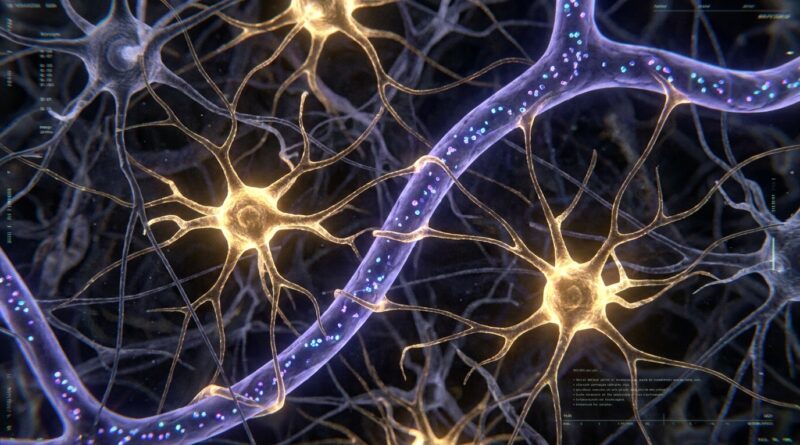
The Astrocyte Upgrade: How New ‘Brain Support Cells’ Research Could Redefine Nootropics In 2026
If you have ever taken a focus supplement, felt great for two days, then weirdly flat by day four, you are not imagining it. A lot of people are still trying to brute-force brain performance through neurons alone. More dopamine. More acetylcholine. More stimulation. But the brain is not just a bundle of firing wires. It also runs on an invisible support system, and one of the biggest players is the astrocyte. These star-shaped cells help manage cerebral blood flow, move fuel where it needs to go, clean up waste, and help neurons signal more smoothly. That matters for anyone interested in astrocyte nootropics, cerebral blood flow, and cognitive enhancement. The new idea is simple. Better thinking may depend less on pushing the brain harder, and more on improving the conditions it works in. For 2026, that could change how smart people build stacks, judge results, and think about long-term focus.
⚡ In a Hurry? Key Takeaways
- Astrocytes may become a major new target for nootropics because they help control brain fuel use, blood flow, inflammation, and signal efficiency.
- If your stack feels inconsistent, start by supporting sleep, blood flow, glucose stability, and inflammation before adding more stimulants.
- This is promising research, not a green light to self-experiment wildly. Durable cognitive enhancement still depends on basics, not miracle compounds.
Why the nootropics world may be looking in the wrong place
For years, the typical nootropics conversation has sounded like a chemistry contest. Which ingredient raises dopamine. Which one blocks adenosine. Which one boosts acetylcholine. That is not wrong, exactly. Neurons do the headline work. They fire, connect, and form the circuits behind memory, focus, and mood.
But neurons are fussy little machines. They need steady fuel. They need oxygen. They need cleanup crews. They need the right local blood supply at the right moment. They also need protection from chronic low-grade inflammation. This is where astrocytes come in.
Think of neurons as the performers on stage. Astrocytes are the lighting crew, sound engineer, caterer, and stage manager all at once. If that support team is tired, underfunded, or dealing with a small electrical fire backstage, the show will be sloppy no matter how talented the lead singer is.
What astrocytes actually do, in plain English
They help control cerebral blood flow
When one part of your brain gets busy, it needs more oxygen and nutrients. Astrocytes help match blood delivery to local demand. That means they are part of the system that makes sure active brain regions get fed when you are reading, planning, solving problems, or trying not to drift off during a meeting.
They help manage brain fuel
The brain burns a shocking amount of energy for an organ its size. Astrocytes help process and shuttle fuel to neurons, including support around glucose use and lactate supply. You do not need to memorize the biochemistry to get the point. If the support cells are not doing their job well, neurons may not get energy in the most useful way.
They help regulate communication between neurons
Astrocytes are not passive packing material. They can affect neurotransmitter levels around synapses and influence how cleanly signals get passed along. So if communication feels noisy, weak, or inconsistent, the issue might not be only the neuron itself.
They help with cleanup and inflammation control
The brain generates waste and stress byproducts. Astrocytes help maintain the environment around neurons. When that environment becomes inflamed or chaotic, your focus can feel like a flickering light bulb. You can still work, but it is not smooth.
Why this matters for cognitive enhancement in 2026
This is the part that should get the attention of the Cognesium crowd. The future of cognitive enhancement may be less about pressing the gas pedal and more about improving road conditions.
That shift matters because many people have already learned the hard way that stimulation has limits. You can make a tired brain feel busy. You cannot always make it perform better. If cerebral blood flow is poor, sleep is off, inflammation is simmering, or fuel handling is messy, your favorite stack may feel unreliable.
That is why astrocyte nootropics are getting attention. Not because astrocytes are trendy, but because they may explain why some interventions help one week and disappoint the next. The target is no longer just a neurotransmitter spike. It is the whole support environment around cognition.
What “astrocyte nootropics” will probably mean in practice
Do not picture a supplement bottle that says “Now with astrocytes.” What will likely happen is more subtle. Products and protocols may start being framed around support functions that astrocytes influence.
1. Compounds that support cerebral blood flow
If a nootropic helps blood reach active brain regions more effectively, it may indirectly improve the environment astrocytes are trying to regulate. Ingredients often discussed in this space include cocoa flavanols, nitrates from food sources, omega-3s, and certain polyphenols. The exact effect depends on dose, person, and overall health.
2. Compounds that support mitochondrial energy and metabolic stability
Anything that helps the brain produce and use energy more cleanly could become more interesting through an astrocyte lens. This is one reason people are paying attention to basics like stable blood sugar, exercise, sleep, and nutrients involved in energy production. It is not flashy. It is often more useful.
3. Compounds that reduce neuroinflammatory stress
Chronic inflammation is bad news for brain performance. If future nootropics can lower inflammatory stress without simply sedating the user, they may help astrocytes do their job better. That does not mean every anti-inflammatory supplement is a brain enhancer. It means the connection is now more plausible and more worth studying.
4. Stack design that respects the “support hardware”
In 2026, the smarter stack may not be the one with the longest ingredient list. It may be the one that creates a better operating environment. That could mean a lower stimulant load plus better sleep support, circulation support, hydration, and anti-inflammatory habits.
Why your current stack may feel inconsistent
This new research direction gives a useful answer to an old complaint. “Why does this stack work amazingly on Tuesday and barely do anything on Friday?”
Part of the answer may be that neurotransmitters are only one layer of the story. The rest is context.
Ask yourself:
- Did you sleep well, or are you asking stimulants to cover up repair work that never happened?
- Have you been sedentary for days, with poor circulation and rising mental fatigue?
- Are you under-eating, over-eating, or swinging wildly in blood sugar?
- Are you dealing with chronic stress that keeps inflammatory signals high?
- Are you dehydrated and wondering why your “brain booster” suddenly feels weak?
Seen through the astrocyte and cerebral blood flow angle, these are not side issues. They are often the main event.
What readers can do right now
Start with the boring wins
I know. Nobody likes hearing that the future of nootropics still includes sleep, walking, and vegetables. But if astrocytes help manage fuel, blood flow, and cleanup, the boring wins start looking a lot more exciting.
Try this basic checklist before changing your stack:
- Get consistent sleep timing for one week.
- Take a brisk walk daily, especially before deep work.
- Eat in a way that avoids giant energy crashes.
- Stay hydrated.
- Reduce needless stimulant stacking.
- Track focus quality, not just energy or buzz.
Judge supplements by stability, not drama
A lot of products “work” because they make you feel something. That is not the same as better cognition. If astrocyte support becomes a real category, the best results may feel smoother and less theatrical. Better sustained attention. Less mental fading. Fewer crashes. Cleaner transitions into work.
Think ecosystem, not ingredient
This is probably the biggest mindset shift. Instead of asking, “What molecule gives me laser focus?” ask, “What helps my brain operate in a steady, well-fueled, low-noise environment?” That question leads to better decisions.
What not to do
Do not assume every circulation booster is automatically a cognitive enhancer. Do not assume every anti-inflammatory compound reaches the brain in a useful way. And do not ditch prescribed treatment because a new mechanism sounds exciting.
Research on astrocytes is promising because it widens the map. It does not erase common sense. If you have migraines, cardiovascular issues, blood pressure concerns, or take medication that affects circulation, get medical advice before trying aggressive “blood flow” strategies.
Why this research is quietly a big deal
The most interesting thing here is not that astrocytes are suddenly important. Scientists have known they matter for a long time. The big change is that consumer brain health is finally catching up.
For years, the market rewarded whatever felt immediate. A jolt. A buzz. A hit of motivation. But long-term cognitive enhancement is usually less glamorous. It comes from a brain that is fed properly, protected from chronic stress, and able to route resources where they are needed.
That is why this topic matters beyond hype. It gives people a more honest framework for understanding performance. Sometimes the issue is not that your neurons need more pushing. Sometimes they need better support.
At a Glance: Comparison
| Feature/Aspect | Details | Verdict |
|---|---|---|
| Old-school nootropics focus | Mostly aimed at neurotransmitters, stimulation, and short-term subjective effects. | Useful, but often incomplete. |
| Astrocyte-centered view | Looks at cerebral blood flow, fuel delivery, cleanup, and the local brain environment. | More realistic for durable focus. |
| Best practical strategy today | Pair modest supplements with better sleep, movement, hydration, and inflammation control. | Highest chance of consistent results. |
Conclusion
The big lesson is refreshingly simple. You cannot get durable focus from a brain that is under-fueled, poorly supplied, and quietly inflamed. The new attention on astrocytes and cerebral blood flow gives the nootropics conversation a much-needed upgrade. It helps explain why some stacks feel hit-or-miss, and why adding more stimulation is often the wrong fix. For the Cognesium community, this is useful right now. It offers a smarter way to think about cognitive enhancement, one that makes every milligram work harder by improving the environment neurons operate in. That is a much better long game than chasing brand names and buzzwords. And it is exactly the kind of next-layer brain health conversation worth having as 2026 gets closer.