The Gut–Brain ‘Broken Link’: How Vagus Nerve Stimulation Became the Surprise Breakthrough for Aging Memory
If your memory feels a little less sharp lately, it is maddening. Especially when you are already doing the “right” things. Maybe you cleaned up your diet, bought the expensive magnesium, tried the mushroom blend, and built a nootropic stack that looks perfect on paper. Yet names still slip. Focus still comes and goes. That frustration is real. And a growing line of research suggests the problem may not be a lack of brain chemicals at all. It may be a broken communication line between your gut and brain.
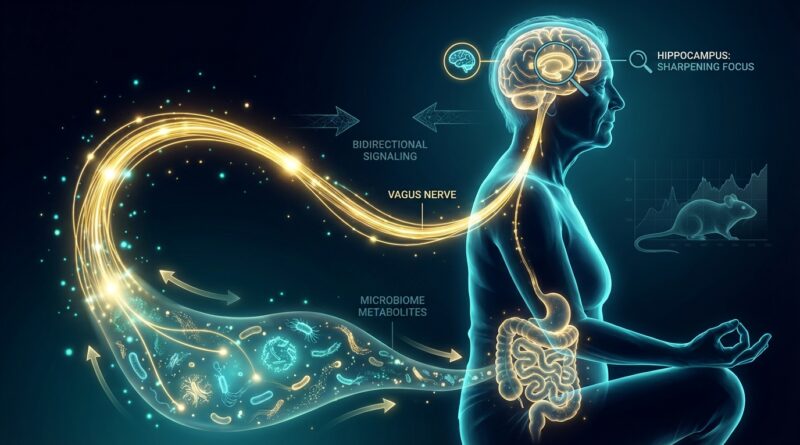
That line is heavily controlled by the vagus nerve, the body’s main information cable linking the gut, immune system, heart, and brain. New animal data is turning heads because restoring that gut-brain connection did something most “brain boosters” never come close to doing. It reversed age-related cognitive decline in older mice. Not nudged. Reversed. That does not mean people should run out and zap their necks with random gadgets. But it does mean the phrase “vagus nerve stimulation gut brain axis cognitive decline” is no longer fringe wellness talk. It is becoming a serious neuroscience story worth watching closely.
⚡ In a Hurry? Key Takeaways
- Restoring gut-brain signaling through the vagus nerve may help reverse age-related memory problems, at least in animal studies.
- If you want to test this idea yourself, start with low-risk vagus support like breath work, exercise, sleep repair, and only consider non-invasive devices carefully.
- The mouse data is exciting, but human proof is still early. Treat this as a promising direction, not a magic fix.
Why this matters more than another supplement stack
A lot of people think about cognition like a fuel problem. Low dopamine. Low acetylcholine. Low energy. So they add compounds meant to raise or support those systems.
Sometimes that helps. Sometimes it does nothing.
The newer gut-brain view asks a different question. What if the issue is not just brain chemistry, but signal quality? If the wiring between the gut and brain is impaired, your system may not respond properly no matter how “smart” your stack looks.
That is where the vagus nerve comes in. It helps carry messages about inflammation, satiety, stress, gut activity, and internal state to the brain. If that signal gets noisy or weak with age, cognition may suffer as a downstream effect.
What the new animal research actually found
The headline finding is striking. In aging mice, researchers restored gut-brain communication and saw old animals perform like younger ones on memory-related tasks. The key idea was not simply “stimulate the brain harder.” It was to repair or reawaken the communication pathway between the gut and the brain, especially through vagal signaling.
That matters because aging does not happen in isolated organs. The brain ages. The gut changes. The immune system shifts. Inflammation rises. Sleep often gets worse. The vagus nerve sits in the middle of that mix like a network cable connecting several rooms of the house.
If that cable starts to fail, symptoms can show up in surprising places. Brain fog. Slower recall. Poor stress tolerance. Digestive weirdness. Feeling “on edge” for no clear reason.
Why scientists are excited
Most age-related cognitive interventions produce modest improvements at best. A small bump here. A slight delay there.
Full reversal in an animal model gets attention because it suggests a bottleneck. Not just a minor tweak. A bottleneck.
And when you find a bottleneck, you stop asking, “What else can I pile on?” and start asking, “What is blocking the system?”
So what is the vagus nerve, in plain English?
Think of it as a two-way biological phone line.
It runs from the brainstem down through the neck and into the chest and abdomen, connecting with the heart, lungs, and digestive tract. It helps regulate your “rest and digest” side of the nervous system. It also sends a huge amount of information upward from the body to the brain.
That last part gets missed.
Many people imagine the brain as the boss sending orders downward. But a lot of the traffic goes the other way. Your brain is constantly being updated by the body. If the updates are distorted by inflammation, poor gut function, chronic stress, or age-related changes in signaling, cognition can drift.
Why the gut-brain axis can affect memory
The gut is not just where food gets processed. It is deeply tied to immune signaling, hormone activity, microbial metabolites, and inflammation. All of those can shape how the brain works.
When the gut-brain axis is healthy, the brain gets cleaner information about the state of the body. When it is unhealthy, the brain may operate in a more defensive mode. Less flexible. Less resilient. Worse at memory formation and recall.
Possible early warning signs of a gut-brain disconnect
You do not need all of these, and none of them prove a vagus issue on their own. But they can be clues.
- Memory feels worse when digestion is off
- Brain fog after meals
- Poor stress recovery after small setbacks
- Bloating, constipation, or irregular digestion alongside mental fatigue
- Shallow breathing and a constant “wired but tired” state
- Lower heart rate variability, if you track it
- Sleep that leaves you unrefreshed even after enough hours
The point is not to self-diagnose from one symptom. The point is to notice patterns. Especially patterns that cross systems.
What vagus nerve stimulation means in practice
This phrase can describe a few very different things.
1. Implanted medical devices
These are used in certain clinical settings, such as treatment-resistant epilepsy or depression. They are real medical tools with supervision, not wellness gadgets.
2. Non-invasive vagus nerve stimulation devices
These aim to stimulate branches of the vagus nerve from the ear or neck without surgery. Some are being studied for mood, inflammation, headaches, stress, and cognitive effects. This is probably what most readers are curious about.
3. Indirect “vagus support” habits
This is the low-tech layer. Slow breathing, exercise, sleep repair, social connection, humming, cold exposure for some people, and gut-friendly eating patterns may all influence vagal tone or related parasympathetic function.
These are not the same as formal stimulation. But they are often the safest place to start.
What you can do now, without getting fooled by hype
Here is the practical part. If this research is pointing to a real bottleneck, the smart move is not panic-buying a device. It is building a simple testable protocol.
Start with observation
For two weeks, track:
- Memory slips, like missed words or forgotten tasks
- Digestive symptoms
- Stress reactivity
- Sleep quality
- Resting heart rate or heart rate variability, if available
- Meal timing and whether certain foods worsen fog
Patterns matter more than isolated bad days.
Build the low-risk foundation first
Before trying any device, clean up the basics that support the gut-brain axis:
- Consistent sleep and wake times
- 10 minutes of slow nasal breathing once or twice daily
- Regular walking, especially after meals
- Enough protein and fiber
- Less alcohol, especially if memory is already slipping
- Stress reduction that actually works for you, not what looks good on social media
These are boring. They also work more often than people want to admit.
If you try non-invasive vagus nerve stimulation
Be conservative.
Look for devices with at least some published human data, not just slick branding. Avoid anything that promises to “cure dementia,” “reset the brain instantly,” or replace medical care. Start low. Track effects. Stop if you get dizziness, pain, palpitations, headaches, or feel worse.
If you have a heart rhythm disorder, implanted electrical device, seizure history, major medical condition, or are pregnant, talk to a clinician first. This is not the place for guesswork.
Why this could change how we think about cognitive decline
The old model says aging brains lose function, so throw support at the brain.
The newer model says the brain is part of a body-wide network. If one major communication route breaks down, cognition may decline not only because neurons are aging, but because the whole system is sending worse signals.
That is a very different frame.
It means some future memory-support strategies may look less like “more stimulation” and more like “better signaling.” Less brute force. More repair.
What this does not mean
It does not mean every memory problem is caused by the gut-brain axis.
It does not mean supplements are useless.
It does not mean mouse results automatically translate to humans.
And it definitely does not mean all vagus nerve devices are worth your money.
What it means is this. If you have been treating cognition as a pure brain chemistry issue, you may be missing a major piece of the puzzle.
Where human research is likely headed
The next few years will probably focus on a few questions:
- Which forms of non-invasive stimulation are most reliable
- Which people benefit most, healthy older adults, people with mild cognitive impairment, or those with inflammation-heavy symptoms
- How long benefits last
- Whether combining stimulation with exercise, diet, or microbiome-targeted care works better than using any one tool alone
That is why this story matters now. Early signals are when people can think clearly, before the market turns every interesting paper into a miracle ad.
At a Glance: Comparison
| Feature/Aspect | Details | Verdict |
|---|---|---|
| Animal evidence | New mouse data suggests restoring gut-brain communication through vagal pathways can reverse age-related cognitive decline. | Very promising, but still pre-human for this specific claim. |
| Practical self-experiment options | Low-risk steps include sleep repair, slow breathing, exercise, gut-friendly eating, and cautious use of non-invasive devices. | Start here first before buying expensive tech. |
| Risk of hype | The term “vagus nerve stimulation gut brain axis cognitive decline” is attracting attention, which means marketing will follow fast. | Stay curious, but demand evidence and track your own results carefully. |
Conclusion
The big takeaway is not that we have found a magic memory switch. We have not. It is that today’s breakthrough animal data showing that restoring gut-brain communication can fully reverse cognitive decline in aging mice is exactly the kind of early signal worth paying attention to before it gets buried under supplement marketing. It pushes us to think about focus and memory in a smarter way. Not just as a neurotransmitter problem, but as a network problem involving the gut, immune system, stress response, and the vagus nerve that ties them together. If you want to future-proof your own protocol, watch for early warning signs, track patterns across digestion and cognition, and experiment safely with non-invasive vagus support rather than chasing every shiny pill. That is where this research becomes useful in real life. And that is the sweet spot Cognesium should keep owning. Frontier neuroscience, practical self-experiments, and a clear filter for hype.